Saturday, July 03, 2010


Olivia Block/Kyle Bruckmann - Teem (either/OAR)

Four pieces, which I hear as a suite of sorts, recorded and rearranged by Block (field recordings, piano, reed organ, mixing) and Bruckmann (oboe, English horn, suona, accordion, field recordings, editing & mixing). Trying to parse out who was responsible for what is a fool's errand, even in sections where one of the pair is much more prominent than the other. I know Block's work far better than Bruckmann's, so I tend (unfairly, I'm sure) to hear "Teem" more in context of her oeuvre and there are certain strands of continuity. One is the up-front-ness of many of the approaches, the saturated sound, here redolent of double-reeds (and, I assume, the reed organ), a keening swirl over the clatter and rustle of taped noise, chorale-like here, strident there. Played at volume, the overtones set one's inner ear abuzz (the opening of part II could clear many a room!). The second and third sections, the two longest, sub-divide into contrasting portions, the howl of the reeds, for example, giving way to obscurely-sourced but spacious field recordings (one guesses highly post-processed, but one could be wrong). On that track, the second, I found the jumping a bit rocky and couldn't quite corral the parts into a cohesive whole, even as the massed reeds re-emerged a couple of times--not they needed to be or were intended as such, but the third track works so well that I wanted to hear more of the "same". On that one, there's a huge welling up of field recordings (I'm thinking Block's handiwork here, but who knows?), a spatially dense and rich fabric into which gasping reed organ is interwoven. Again, about midway through, the gears shift--indeed the gears seem to be grinding, harsh screeches against electronics (processed accordion?), once more multiplying plies into an exceedingly complex weave but here it's one that bears some poetic affinity (to me, at least) to the music that we'd heard just before. The sound is simply amazing, the piece very powerful. The concluding section indeed has something of a denouement feel to it, a soft, pulsating set of reed tones, again multi-layered, rich and detailed.

A fine recording, as fascinating as it is occasionally troublesome to decipher.


Ernst Karel - Heard Laboratories (and/OAR)

Like the title says. I imagine we've all been in situations where the sound environment is so overtly full and rich that we pause and linger, absorbing the waves, wallowing in the mass of sound. I recall, long before I had any notion of "field recordings", leaning against the engine housing of the Block Island ferry, imbibing the deep, complex thrum, losing myself to the vibrations felt through the metal. Generally, at least in discs that have happened my way, musicians tend toward subtler territory, sounds that tinge the aural space instead of saturating it. Not Karel.

The recordings here are unprocessed, taped in various scientific and medical laboratories at Harvard, though I suspect they're often layered atop one another (perhaps not!). I'm not sure what to say otherwise, except maybe to describe them as possessing roughly the kind of hums and buzzes one encounters in such environments, augmented with the bangs and clinks occasioned by human activity and the odd voice. It's just there, much as it would be if you were sitting in the room. I'll say, however, that I enjoy it immensely, love sitting here, in my room, vicariously experiencing the sonic nature of those spaces a couple hundred miles away. As in all fine projects of this general nature, Karel coaxes the listener into perceptions and awareness (s)he wold likely never have otherwise experienced, always a very valuable thing.

and/OAR

Cage.Frey.Vriezen.Feldman.Ayres.Johnson Manion (Edition Wandelweiser)

An absolutely delightful recording, beautifully selected and performed by Dante Boon. The gently spiky "Etude 2" from Cage's "Etudes Australes" opens Disc 1, providing a fine introduction and contrast to Jurg Frey's gorgeous, and fetchingly titled "Sam Lazaro Bros", a soft set of elegant chords, arrayed in an almost stately manner, those with delicious irregularity, somewhat reminiscent of Satie's "Ogives". It hangs in midair, raindrops on a thin vine, very beautiful. Five very brief, almost baroque (and quite fun) pieces by Samuel Vriezen lead into Feldman's "Last Pieces" (1959), four short compositions. The third, "Very Slow. Soft. Durations are Free." is a deep, almost static work, superbly played by Boon, clearly pointing toward the composer's mature music.

"Two Pieces for Piano" (1935) by Cage are next, both vivacious and surging, followed by four more examples of pianistic brevity, this time by Richard Ayres; they're dreamy, frilly and perhaps a bit slight but fit in well as mini-bonbons before Cage's "One" (1987). It's almost as though Boon took the Frey piece and stretched it out even further, each cluster drifting up, the space between them palpable; fantastic performance. But there's more! And we're still on Disc 1. Tom Johnson, who can be as musically geeky as they come, manages to overcome that tendency (as he often does) in "Tilework for Piano" (2003) "in which a fifteen-beat phrase can be covered by a simple rhythmical three-note pattern that appears at five different speeds." And you can actually hear that if you listen closely, though more likely you'll just be entranced by the dance of tilings as they're overlaid in increasingly complex ways while still retaining enough clarity that one isn't entirely lost. Lovely piece. 34 seconds of trilling Vriezen closes out the first disc.

As excellent as the offerings have been on Disc 1, the real jewel in this set is Michael Manion's "Music for Solo Piano" (2006), 34 minutes of bliss. It's disarmingly simple, just a slow sequence of soft chords, often repeated (or almost repeated--Boon's a master of the subtle variation in pressure or duration) but chosen with exquisite care. The shifts take on a real dramatic quality, the small variations within the chords forming ghost melodies. The music floats through the room, chord by chord, through one door out the other, alien and beautiful. A great work of music, I've had it on almost constant rotation for days.


Eva-Maria Houben - Works for Piano (Edition Wandelweiser)

Two more sets of spare, slightly somber music for piano by Houben (also performing), who I've previously not heard to the best of my knowledge. Though tonal, her work isn't easy, imposing fairly severe listening demands due to length and iteration. The opening piece, "Klavier" (2003), for instance, spends its first 15 minutes in a kind of slow seesaw between simultaneously struck very low and very high notes/chords that vary only slightly and a mid-range one that alters some what more often. It's hypnotic, after a fashion, and oen comes to appreciate the contrasts and progressions, even if the latter is more in one's head than the music. After about 15 minutes, the second half turns even darker, the heavy chords predominant, trudging toward its conclusion. It's very moving, though, resolute like a martyr trodding toward the pyre. "Drei Chorale (penser à Satie)" (2007) feels substantially lighter despite consisting of sets of four descending chords in its first half (which, I must say, don't strike me as being preoccupied with Satie). Again, about a third of the way through, Houben switches gears, reducing the chords from four to three, in a low-high-low arc, then to sets of five in the final third. The calmness, even stateliness, is very effective and does give the strong effect of thinking, considering. On "Senza Espressione" (2007), however, the the paired scale-like lines, often one descending, one ascending, while attractive and nicely spaced, feel a bit too much like an exercise, not attaining that delicious balance between simplicity and depth as in, say, the aforementioned "Ogives".

Disc Two is largely given over to the 46 minutes of "Und Entfernt Sich Wieder - Singend" (2005) (And Swimming Away Again - Singing), mostly resonant low key, struck in brief patterns, allowed to hang in space. Here I do get something of a Satie feel, but the Satie of the mystic, Rosicrucian period. There are slight moments of respite where Houben moves higher on the keyboard and introduces a regular cadence but, for the most part, it's like staring down into a dark pool of water deep in a well, seeing the occasional soft, black ripple. On the one hand, it's quite effective and, again, moving, but it's a huge amount to try and grasp, spartan as it is. I've a feeling I'll come back to it in the future, each listen providing more shape and color, like gradually adjusting one's eyes to the dark. The recording closes with "Three Lullabies" (2007), the most overtly beautiful pieces here and, I mus say, my favorites. Gorgeous sequences of paired chords here, single rays of light there, floating and somewhat eerie, with just enough sourness to impart a troubled dream.

A fine recording; I want to hear more from Ms. Houben.


Tim Parkinson - Piano Piece Piano Piece (Edition Wandelweiser)

Richard did a very good write-up of this release recently, one that to an extent captures my opinion of it, though I think I'm a tad less charitable. It took several listens, on my part, to get into it at all; I first hear little but random strings of notes, random, moreover, in a particularly "classical" way that didn't sit so well with me. Especially coming during the period I was greatly enjoying much of the music above. Little by little, however, the first of the two pieces here ("Piano Piece (2006)") began to ingratiate itself to my ears. The initial scalar runs were a bit off-putting, overly dainty, but took shape retrospectively when the ensuing dark, mordant notes appeared. This seems to be the best way (for me) to listen, to hear the sections, insofar as I can differentiate them, in contrast to those immediately before and after, sort of holding them in my aural hands, weighing them, noticing the different shadings, hues, etc. I'm not sure it reached the same degree of profundity as the Frey, Cage, Manion or Houben works but, as Richard pointed out, there's a certain uniqueness in play that is very winning and, moreover, makes me think there might be levels I'm not yet privy to.

Still, I couldn't worm my way nearly as much into "Piano Piece (2007)". In the notes to it, Parkinson writes, "To work, for a period of time, until that work and time is over." Enticing, but the work so portrayed seems to me too akin to the sort of thin I do during most weekdays, that is, rather mundane bookkeeping. Here, the randomness doesn't, to me, happen upon many areas of fascination or beauty. There are moments, to be sure, and had those been collected in a ten-minute piece as opposed to strung out here and there over 35, perhaps it would have worked for me. As is, I found myself losing patience, unable to get into sync with Parkinsons's vision. As above, even more so perhaps, I leave open the strong possibility that this is more my problem than his. I do get the sense of a keen intellect in action here. As with Houben, I'm very curious to hear more and, eventually, to hear what I've been missing.

Edition Wandelweiser

available stateside from erstdist

Thursday, July 01, 2010


Barry Chabala gave a solo performance last evening in a room in St. Mark's Church, Manhattan. Although he'd mentioned to me some of the selections beforehand, the concert was presented as a single, uninterrupted set, so it wasn't until afterward that I was able to get a picture of the structure.

Throughout, field recordings were heard, beginning with one by James Connell made in NYC, that included subways, Yankee fans, "Take Five" and other archetypal New York sounds. I knew that a couple of Michael Pisaro's "Transparent Cities" works were to be part of the program and was momentarily confused, both by the NYC-nature of the sounds (Pisaro's recordings having been done in and around LA) and the rather loud, harsh single notes limned by Chabala which stood out quite a bit, much more so than the sine tones in Pisaro's original recording. So there was a bit of misunderstanding on my part.

As well, it turned out that Chabala was interpolating parts of Pisaro's "Mind is Moving" during the entire evening, further "muddying" the waters. In any case, when he moved into the "Transparent Cities" pieces (nos 8 & 21), things settled more into the vein I'd expected, though again, his guitar, whether softly plucked or excited by an e-bow, remained somewhat more prominent than the sine waves one had become used to in the Wandelweiser releases. But the integration with the taped sounds felt true and slid for the first time--very, very nice.

As Pisaro uses considerable spans of silence in many of his works, one never was quite sure that a piece had ended. But Chabala soon segued into an area clearly different with Pisaro's "sleep, river, bells, chords" (solo guitar version) which essentially consisted of 12 or so (I glanced at the score but don't recall precisely) four-note rising arpeggios, each (I think) different and each payed rather clearly, with some vibrato, by Chabala over a varying series of field recordings. Even better, the 8 o'clock bells that tolled in St. Mark's church appeared just before a quasi-similar peal emerged from the guitar.

Finally, "Mind Is Moving" emerged again as it had through the evening, now played over a tape by Chabala that included a particularly lovely rain section and the sounds of his two sons, talking.

It was a lot to take in in one gulp and may have benefited a bit by either breaking up the pieces or providing a road map giving the listeners at least a glimmer of the forthcoming structure, but there were beautiful moments strewn through and the very nature of the slow, steady pace caused one to concentrate mightily and really appreciate the sounds, their contrasts and affinities in texture and spatial array. A fine evening.

Tuesday, June 22, 2010


Hal McGee (compiler) - Dictaphonia, Vols 1 - 6 (HalTapes)

What can one say? Six volumes of recordings by dozens upon dozens of individuals, all of whom, if I'm not mistaken, sent Mr. McGee their contributions on microcassette, phoned them in or otherwise got the stuff there. Is there quality control in effect? Hard to say! Unsurprisingly, the offerings vary wildly in attack (not to mention listenability). At the nether end, there's a kind of homespun Chadbourne, extreme lo-fi effect where "weird" (ok, obnoxious) is substituted for interesting. On the other hand, sprinkled here and there, are some genuinely lovely and/or strong pieces. I'm not at all sure that matters in the scheme of things as I get the impression the intent is just to listen to the stream, allowing oneself to be intrigued or bothered by whatever shows up next.

There are a handful of recognizable names (not too many, to me) in play. On first listen I was intentionally not following the listing, so I had no idea who was performing. On volume one, my ears perked up on track 21 and, sure enough, it was Jeph Jerman. Yet, amidst a welter of detritus, there was also a piece called "Spring" by Violet out of Bethesda, Maryland that was pretty great. Who or what is Violet? I have no idea. [duh, now I do-Jeff Surak--I only wrote up a release of his a few months ago...]

Volume 2 continues with essentially more of the same. Not so surprisingly, some of the more successful pieces are those who put the weirdness to the side (at least a little bit) and just play. So Richard Orlando’s lovely “Farrington Street Blues” (on a dobro?) and Mark McGee’s “Capoeira Blitz Squad”, presumably on a berimbau (that these are recorded over phone wires doesn’t do a lot for positive instrumental attribution!), stand out as just enjoyable pieces of music. Also a very nice closing banjo work by Pony Payroll. I take it this is he

Not much stuck out on Volume 3, sorry--well, a kinda nice thing by Raw Mummy out of Nagasaki for a straw and water. Similar with Vol. 4, though containing amusing/enjoyable work by Enstruction and Kathy Burkett (a staticky rumination on a small dog).

Vol. 5 opens with a wonderful, humorous song by Don Campau, "Don't Dick With My Dictaphone", a lovely acoustic guitar number, reminiscent of Fahey. This volume, for one reason or another, is reasonably strong. Along with the usual bunch of oddities, there are quite a few solid, interesting pieces, including those by William Wesley & the Tiny Sockets, Rajun Cajun and Mi. T.-CON.

Vol. 9 (the next one sent me) is notable to readers of this blog for the inclusion of works by Kieth Rowe and Mattin. I'm biased, of course, but it's interesting to me how, while occupying a quasi-similar contextual space, Keith's work seems to me to contain so much more that the average contribution here. It's static, faint radio voices, hums, etc. but has enormous depth. (btw, Richard offered that this piece may be the same as one that circulated a few years back?). It's a fantastic piece, though. Mattin's "For Hal McGee" is a semi-interesting, self-referential song about contributing to this comp, charming in its own way. "Hal, what do you think of this? Good quality music? Well, this is definitely not AMM but maybe it will be released on the Erstwhile music label. That will be a bit of a shock." hee-hee. Much of the rest of this volume is fairly good as well--if you're only going to get one, it's this.

Hal also sent a disc by Don Campau, he of the non-dicking with the Dictaphone, titled "The River is My Body". The first, half-hour piece in some ways incorporates many of the traits found on the compilations--lo-fi, staticky taped sounds, disembodied voices--but it's done so with far more sense of space and sound placement, varied with bits of guitar and other "musical" elements, less sophomoric humor. Campau creates a very enjoyable, idiosyncratic sound world, always shifting, always holding interest (he interpolates, if not the exact recording something similar, the German code sequence heard in AMM's Hamburg show from '84), well constructed. The second one [I belatedly realized--not that's it's obvious from the packaging!--that this is a split disc of Campau and McGee] is a bit more disjointed and clunky, much less "musical" content, more noise (including Hal on the phone), but not bad.

Hal McGee
Don Campau

Saturday, June 19, 2010


Seth Nehil - Furl (Sonoris)

My experience with Nehil's work is, typically, an interestingly rocky one. Often on first blush, I feel at something of a remove, sense a remoteness in it that's slightly off-putting. On subsequent listens, however, mini-worlds appear that are arresting and enticing, even as they're nestled into an environment that gives me pause.

It was much that way with "Furl". The elements that I foregrounded on my initial pass were ones I'm not so keen on, certain post-serial gestures I associate with 60s electronic tape work (the backwards rushing crescendi, a kind of two-step cadence of a falling heavy object--hard to describe that one, but it sticks out--, etc.) and an approach to vocals on one track that leaves me cold. I imagine because I, at least, find a point of reference to composers like Koenig, Riijmaakers, etc. that I find similar highs and lows with Nehil's music. When it clicks, as on "hiss", which is out and out gorgeous, all muted, quavery bell tones emerging from clouds (sometimes downy, other times acidic), everything's well with the world. When, on the following track, "swarm", vocal interjections appear, even as they're embedded in some wonderful, resonant clangs and thwacks, they inevitably carry connotations of archness that give me pause. "whoosh" returns to some fine electro-acoustic sloshing and, well, whooshing, again feeling something like an updating of classic 60s work in the field (the surges, the echoes, the shape of many of the sounds) while the concluding "rattle" is a nest of nettles, dull bangs and harsh whines interspersed with vocalized "bloops", not as satisfying to these ears.

At its best, to these ears, "Furl" is pretty spectacular. I'd rather Nehil not have veered into areas I find less promising but others may consider exactly appropriate. In any case, fans of the aforementioned electro-acoustic music should give this one a go.


Yannick Dauby - Overflows (Sonoris)

"Overflow" is one piece, apparently consisting entirely of layered field recordings from around Taiwan. It moves from place to place, climate to climate, but has the feel of one great, surging mass of sound. Crowds segue into thunderstorms into motors into different crowds into wind into insects into birds, into silence, multi-plied, texturally rich, amorphous. It's rather a pleasure to immerse oneself in, especially at volume, though after it's over, I didn't feel much in the way of resonance; not too much stuck. Well done, on the one hand, but perhaps lacking the sense of poetr I want to hear in field recording work.

sonoris

Wednesday, June 16, 2010

Briefly, two "unofficial" releases on Copy For Your Records, both very good and worth your while.


Delicate Sen - 20090829, Betalevel, Los Angeles, CA

Anne Guthrie (french horn), Billy Gomberg (synthesizer) and Richard Kamerman (motors, objects, electronics) with another very fine effort. As before, on their self-titled disc from last year, there's a simple deliciousness in this combination of sounds, especially the slightly forlorn quality of the horn. But more, it's in the pacing, the willingness to turn toward calmer, even soothing areas when that makes sense and the feeling of completeness, of a full set of music that lingers exactly as long as it has to, in this case about 1/2 hour.


Tandem Electrics - 20091118 @ Mike Rosen's, Oberlin OH

Kamerman with Reed Evan Rosenberg (electronics). Only similar to the previous disc in how well it scans how ably it tiles the audio space. The elements are harsher, though not without ameliorating portions, concentrating on buzzes, whines, rumbles, scrapes. But as in their earlier releases, the ply is satisfyingly thick, the ideas smoothly flowing. It actually ends with a surprising veer into quasi-Fennesz territory. Again, a short (less that 22 minutes), very satisfying performance, well worth hearing.

Interested listeners can contact Richard Kamerman at: orders@cfyrecords.com. He'll be happy to bake you copies.

Thursday, June 10, 2010


Michael T. Bullock/Andrew Lafkas - Ceremonies to Breath Upon (winds measure)

Almost 3/4 of an hour of two basses, played arco, in a large, resonant space. As they say, you had me at hello. The place was the Gassholder Building in Troy, New York, what seems to be a two story octagonal structure with a domed roof and one can only imagine the additional richness that would have been in play were one there to witness the performance, but this disc does a fine job capturing it, and a delightful concert it is. The overwhelming sense I receive is one of restraint, of allowing the room to have its say instead of attempting to fill it. Bullock and Lafkas play at moderate volume but with unfailing delicacy and respect for the space. The pace is always slow and stretched, the sounds straddling the tonal, never getting too comfortable on one side or the other, the textures varied within a spectrum that keeps largely to traditional technique. Little by little, the tones grow deeper, growlier, eventually entering sub-aqueous territory, providing quite a thrilling, even dramatic close as they drift off, exterior sounds entering. Wonderful concert, wish I'd been.

winds measure


Mawja - Live One (Chloe)

Mawja (Mazen Kerbaj, cornet, objects/Michael Bullock, bass, feedback/Vic Rawlings, cello,surface electronics) released a fine disc on Al Maslakh a while back. This set of two performances from Chicago and Washington DC is also from 2005 and is also quite a good one. Quiet rough and tumble might be one way to describe their music, Bullock doing yeoman's work staffing the lower end of things, keeping it bubbling and booming, Kerbaj on the breathy and softly strident front and Rawlings injecting roughage via plucks and scrapes. Quite active without becoming clogged or over-busy, low-key on the surface but with rambunctiousness to spare, the tracks, once again, are ones I would have loved to be in the room for. Good, intelligent improv.

Chloe

Sunday, June 06, 2010


Ernst Karel/Annette Krebs - Falter 1-5 (Cathnor)

It's very heartening, right on the heels of "Acts Have Consequences", to encounter another release that's in the same ballpark a far as essential quality and indescribability go (I should mention that "motubachii" is right there as well, a recording I still can't figure out what to say about), though this was recorded in 2006 and, I believe, contains substantial post-production work, presumably by Karel. Whatever the case, "Falter 1-5" is one absorbing, excellent work.

A bunch of us were talking about Krebs' music last week in Philly and the term that kept popping into my head was, "coltish"--that wonderful combination of awkwardness and just-rightness. In her own work, this can force the listener into wider accommodations than he/she might normally be used to, which is a very good thing, if not always the easiest matter. While I assume that Karel's contributions make up a good half of the raw sound element here, I'm also guessing he molded the entire proceeding, encasing Krebs' coltishness inside another layer of form, a translucent one, a very fascinating idea.

One of the core strata that weaves its way through these five pieces is the "electricalness" of them. Current is everywhere, controlled here, erupting in sizzles there. One expects to receive a mild electric shock when retrieving the disc from the player. Otherwise...rather tough to define. The mix of various components is very well balanced: gritty/smooth, loud/soft, harsh/oozing. But essentially, everything feels grounded and real-world somehow; it's far from field-recording, but almost gives the sensation of sounds encountered in situ. That's a compliment, a big one.


Patrick Farmer/Dominic Lash - Bestiaries (Cathnor)

This is an engagingly tough nut to crack, one I don't think I've entirely decoded but have enjoyed the attempt. All acoustic (percussion and bass). It's not the sounds themselves that present difficulty--the pair tends toward the quietly groaning and rustling, all played carefully and with no small amount of beauty--it's more the overall structure of the three pieces, which strikes me as having a tenuous, fibrous aspect, where the connections seem enticingly tentative, wispy. Lash contributes some really great, low growling tones, as though bowing a tightly held, 1/4" thick bass string and Farmer is restrained yet oddly busy throughout.

There are fits and starts, notably in the second track, though listened to from a certain angle, I can almost accommodate myself to them and hear them as not stuttering or meandering at all. These glimmers, for me, are ephemeral however; I go back and forth between enjoyment and frustration for maybe a third of the disc. I have to think that, ultimately, this is a good thing, even if I can't quite perceive it, in its entirety, right now.

fwiw, the entire last track (the three sections seem arbitrary and the disc plays as a single piece) is overtly fantastic. The thing is, I get a feeling the rest of it is greater than I'm able to discern at this point. I totally expect to revisit this sometime and be astonished at what I had failed to hear earlier.

Fine, challenging (at least for this codger) work.

Cathnor

available this side of the pond at erstdist

Thursday, June 03, 2010


Kevin Parks/Joe Foster - Acts Have Consequences (no label)

It doesn't occur that often but it's often the case when it does, and I wonder about it--that a given recording immediately, in its first few moments, sounds great. You somehow have the confidence that the whole shebang is going to be solid, at the least. When sounds begin appearing on "The Leery Light of Dawn" (all eight track titles, I believe, are derived from texts by either Borges or Vollmann), they're not at all atypical in one sense, but there's a rightness about them, a feeling that all major components are balanced in an unusually precise and fascinating way. It moves like a living thing. As one progresses, there's also a refreshingly huge breadth of sound sources, many of them welcoming, not so severe. But unlike similarly ingratiating sounds encountered elsewhere, there's a sense of these having been earned, of having been revisited after a lengthy and intensive trip to sparer, serer climes. There's also a fantastic, almost liquidly transparent feeling of depth in play here, by which I mean that the sounds are clear and, generally, well-spaced, implying a kind of simplicity, but their relationships, both in temporal proximity and with events occurring minutes before or after, strikes me as quite complex, enough that it's real hard to get a firm grasp on much of the music here; you know you've heard something wonderful but you can't quite figure out why.

More concretely, there's a larger portion of overt guitar in play than one might have expected, including a passage or two that are hard not to read as homages to Rowe. You can pick up Foster's trumpet now and again as well. These episodes of familiarity go a long way toward making the music hear reasonably approachable, though the pair, of course, includes ample swathes of harshness, meta-logical intrusions, etc.

Try as I might, I can't find a stretch of sound here that's less than enjoyable. I've a feeling there's more to be written about "Acts Have Consequences", but it will take many more listens. On the other hand, this is the kind of release I'm confident will get many more listens, for years to come, revealing greater and greater depths of its inner workings. One of the best improvised releases I've heard in quite some time. Get it.

To the best of my knowledge, available only via erstdist

Sunday, May 30, 2010


Nicholas Szczepanik/Juan José Calarco - Lack Affix (Unfathomless)

Field recordings captured by Szczepanik (in Maryland and Washington, DC) and Calarco (in Buenos Aires), processed by each. Always difficult to write about aside from general impressions of place, mood texture. I suppose "pacing" is another important attribute and this set of three pieces is paced quite well, which is to say that it has the feel of an authentic environment, not one gussied up or fussed over for the purpose of a recording. Things unspool unhurriedly, the sound-colors vary but seem as though they could indeed have proceeded from one another, no sense of having been artificially affixed. It's dark, moody, pensive, a bit damp. Enjoyable without knocking one out which, really, is a good thing.

unfathomless


Hiroki Sasajima - Nille (Mystery Sea)

Here we have more field recordings, layered but otherwise not apparently processed and while perfectly pleasant, something nags me about them. Their source is obscure, though water is around, engines of some kind, rustling that appears to be naturally compelled (perhaps via wind). But I get the sense of too many fingers in the pie, too much interference in the act of compiling the sounds on the part of Sasajima. It's, oddly, that the sounds are too consistently interesting, that there aren't the lulls one would expect to encounter, as if what one hears has been cherry-picked, all the "best parts" and that seems at odds with, at least, the aesthetic I prefer. The last track (perhaps processed?) has a repeated pulse that provides some interest, though I guess my point would be that a really good field recording release wouldn't need that. It's fine, many listeners in this neck of the woods will probably enjoy it, but it somehow failed to move me.


James McDougall - Dispossession of Periphery (Mystery Sea)

Staying in a similar area, Australian McDougall also works with field recordings, more processed than Sasajima I believe, and achieves more textural depth though again...not as compelling as I'd like to hear, maybe a few shades over-dramatic. There's a line somewhere between field recordings and soundscapes and sometimes that line gets afflicted with a kind of exotica sensibility that, lush though it may be, fails to completely satisfy. On the third track here, for instance, there's a sound that can easily be interpreted as a didgeridoo (it may be one, for all I know) which imparts too much a postcard feel to the offering. Again, not "bad" in any fundamental sense, just that I feel I need me some Tsunoda as an aural palate cleanser.

Mystery Sea


Christopher McFall - The Body As I Left It (Sourdine)

McFall knows how to attack this problem properly. HE doesn't shy away from quasi-melodic content but manages (usually) to embed it in a setting where it feels natural, not tacked on, as though the motors, wind, water, etc. just happened to have come together for a brief while in this attractive pattern. When he steps beyond this, as on the fourth track, and introduces clearly separate "musical" elements, there's a bit of a disjuncture; it's too overt, too ingratiating, perhaps nodding overmuch to a new listener. It's something of a tightrope walk, but for every misstep, McFall nails one, as on the subsequent cut, where rough bangs and ticks jostle with faded, romantic piano (reminding me very much of parts of Asher's "Miniatures" set. The pieces are short and one does get the sense of an intentional stab toward a slightly wider audience, but overall, I was pretty much sold and enjoyed the ride.

Sourdine

Wednesday, May 26, 2010


Yasunao Tone/Tomomi Adachi - Roulette, 5/25/10

Tomomi Adachi is a boyish looking fellow, a vocalist/electronicist who specializes in a branch of sound-poetry that often incorporates devices worn on his body and clothes and triggered by his movements. He opened last night's performance with eight pieces, one by Dadaist Hugo Ball, four 1960s works by sound poet Seiichi Niikuni and three self-composed works.

Ball's Gadji Beri Bimba, composed of nonsense syllables (adapted by Talking Heads for their "I Zimbra"), was spat out furiously by Adachi, a bit in the manner of a particularly vicious Diamanda Galas excoriation, his voice enhanced electronically, processed via a strap wrapped around one hand. The electronics within that strap, which was used several times last evening, seem to be sensitive to its orientation in space. By choreographing his movements, Adachi can summon a bewildering display of effects, sometimes used to great advantage, sometimes tending toward mere ornamentation. The Ball piece was quite effective, however--brief, tough and to the point.

The four works of concrete poetry by Niikuni were a varied lot, though the first, "Opus Ki", was quite akin to the Ball, a rapid-fire string of nonsense words (in "Japanese"), here performed acoustically with a sing-song aspect and a percussive tinge. "Second Hand" used no words, only visual elements, incorporating the electronic gear, beginning softly, increasing in volume and complexity along the way, very much a stationary dance piece It was rather fun to attempt to puzzle out the relationships between a given gesture and the sounds that emerged synchronously. "Rain" was, in some ways, the loveliest piece of the evening and a disarmingly simple one. Adachi took the "score", which I believe consisted of several rows of Chinese characters, held it in front of his face, and, using a forefinger to count, clicked his way down the list, sounding something like a typewriter. Each "click" consisted of from two to four sound elements, which one could hear separately or as a cluster and were repeated virtually identically, down each of perhaps eight rows containing about 24 characters per row. After making his way through the score once, he paused, removed his red shirt, buttoned shirt to reveal a white t-shirt with a large Chinese (maybe Japanese--I'm terrible at this) character and went through the process again, perhaps imparting a slightly different emphasis to the clicks. He then removed the white tee, revealing a blue one, re-donned the red over-shirt, calmly buttoned it up and finished. Very satisfying in an odd way. The Niikuni portion closed with a delightful piece utilizing a homemade instrument, a metal frame looking something like a music stand, strung with rubber bands and other pluckable detritus, all amplified. Adachi stroked and struck the various surfaces, occasionally emitting a soft vocalization. At one point he, à la Rowe, used a small hand-held fan to excite the elastic. Nice work.

Adachi's own pieces included "Face", wherein he enunciated, in English, parts of his face, tapping them to generate sound (for example, cheek, head) or otherwise toying with them (holding his nose while saying "nose", scratching hair, etc.) soon mismatching them humorously, "Sekannoshu" another very quick reading, this time of an ancient poem and the finale, "Voice and Infrared Sensor Shirt". As indicated by the title, this involved a wired garment which reacted to his every move. Reminded me a bit of Laurie Anderson circa 1985, though of course, more technologically advanced. Still, for all the "wow factor", the music generated was less than gripping, a bit too much flash for my taste. He ended it well, however, removing the still actively yowling shirt, draping it over his laptop (the shirt "protesting") and folding it neatly, shutting it up.

An intriguing set, all in all, though I found the "simpler" works more rewarding than the elaborate ones.


While I was certainly more highly anticipating the Yasunao Tone performance, I found it oddly anti-climactic. Tone is a delightful looking gentleman, reminding me of Eddie Prevost (no doubt due, to some extent, to his activity with Group Ongaku in the early 60s) with his gray brush cut and beard and compact physique. The piece was called "MP3 Deviation" and involved degraded mp3 files which (how, I've little idea) served to generate further electronic sounds, many of which outside of Tone's direct control. Source aside, what the listener was presented with was a wall of noise, but noise of a particular character which, to my ears, was all too digital. There's a certain slithery, smoothly-bumpy (!) aspect that we're all familiar with from fast-forwarding discs (mp3 files as well, I imagine) and a basic underlying pulse at a similarly recognizable tempo. I tend to vacillate between enjoying the surfaces textures so encountered and losing interest when hearing nothing much of any depth. Tone's music, when I concentrated fully, struck me this way. It was like peering into a vast, randomly fluctuating electronic process, everything a-glitter but mostly surface, like staring into a "snow" pattern on an old TV. The sounds, complex as they were, seemed to have been scrubbed and sanded clean, all the grit and meat removed.

When I relaxed my concentration a bit and just allowed it to wrap around me, it fared better. There were tiny stutters, small gaps of digital silence, that popped up throughout, rather like happenstance white spaces on a page filled with randomly distributed markings; these were quite welcome. Still, I couldn't help "relapsing" into a state of attentiveness and when I did, I felt the music needed to be both louder and denser. Tone, behind his, laptop, was continually making apparent adjustments though, save for some subtle rhythmic elements that emerged toward the very end of the work, I couldn't pick up any overt changes those adjustments might have triggered.

As can often be the case with sound forms that emulate, intentionally or otherwise, natural or mechanical processes, I find that sitting in a venue, listening to it as "art" often detracts from its merits. Had I been wandering around a particle accelerator or the like, turned a corner and been confronted with such a maelstrom, I doubtless would have greatly enjoyed wallowing in it. Perhaps my problem more than Tone's but it's the type of piece, at the least, I would have preferred encountering "in the wild".

(I just wanted to add that one of the small pleasures of going to shows in NYC is sitting in the same audience as people like Robert Ashley...)

Roulette

Tuesday, May 18, 2010

A new batch from Another Timbre....


Martin Küchen/Keith Rowe/Seymour Wright

Rowe's ongoing "battle" with the saxophone continues, perhaps an updating of the Doneda/Leimgruber collaboration, "The Difference Between a Fish" (Potlatch). Here, however, he's in the company of younger musicians who, at least on the surface, are somewhat more in tune with his concerns and the result is decidedly happier, if not earthshaking. Both Küchen and Wright retain enough recognizable saxophonics to present a challenge to Rowe and the odd, reedy shriek or bellow surfaces now and then, but by and large they sublimate those urges, operating near one or another periphery of their horns, with attached, vibrating metals in play as well as the growls, breaths, and buzzes one would expect. Rowe is quite recognizable himself, especially with the hand-held fans and their telltale buzz-saw emanations; this may well have been during a still ongoing phase where he's re-examining approaches from the recent past, ones he'd abandoned for a few years. In any case, these are all rather technical concerns, and if one simply lies back and concentrates on the music, ignoring its sources, it's a satisfying affair. I don't hear the same level of concentration on Rowe's part as I do when he's collaborating with, say, Sachiko M, more that he's content to sink into the existing pool of sounds, prodding gently at times but more often being accommodating. This leaves the saxophonists to push matters along and they do with both care and garrulousness.

It's a good performance and had I been in attendance, I'd have left satisfied. I do think it reveals a bit more on repeated listens, especially the denser interplay between Rowe and the more metallic expostulations from the saxophones, some luscious texture in there. If there's a problem, it might be that for all the lovely portions, the whole feels a tad loose. A minor quibble, though. It's well worth hearing for the contributions of all involved.

(I like the off-center printing on the disc itself very much....)


Ap'strophe - Corgroc

The second release from the duo of Ferran Fages (acoustic guitar) and Dimitra Lazaridou Chatzigoga (zither) (how great is that name, btw?). The disc consists of two pieces, the first about eight minutes, the other some 40 and, so arranged, it's hard not to hear the album as a prelude and a central piece. Hearing it so has its advantages as it forces one to try to grasp the pieces as a whole rather than a sequence of events which, in this case, with my ears, serves to benefit the music. The first track, "spring", begins quite harshly, even unpleasantly, a screechy, raspy sound (tightly bowed zither?) over a wavering, thin drone. It's a little off-putting on its own but "looking back" at the piece, after the gorgeous denouement of softly stroked guitar, one gets the sour/sweet aspect and it feels like a solid whole.

Similarly, with greater complications, for the long work. On the one hand, it seems to take a while to really find its groove but after it does, you realize how necessary the initial, more meandering parts, were. It opens with delicate, bowed drones, jangling a bit, very pretty then subsides into a very sparse are, all isolated squeaky bowings and soft plucks and taps. Almost imperceptibly, things begin to gel, the two instruments edging into more plaintive tones, still spare, but with emotional resonance. It's not a straight path, though, wherein lies much of the fascination. They veer of into several pathways, some less promising than others, enter some enticing buzz-saw environs and eventually "stumble" into a peaceful, serene glade of sorts, humming and vibrating more solidly, more convincingly than at the beginning. It's quite a lovely journey, imaginatively (if unconsciously) plotted.


Håvard Volden/Toshimaru Nakamura - Crepuscular Rays

I find this oddly difficult to say much about. It's fine, solid, enjoyable but somehow routine. That melding of more or less tonal acoustic guitar and Toshi's nimb-y washes can all to easily end up ambling down a pleasant but well-trodden path where, once the general parameters are established, it seems as though anything introduced is ok. Kind of like picking out a melody on an mbira--it's always in tune so no matter what you do, if you have a semblance of rhythmic aptitude, all is well, but it's not nearly as deep as, say, Shona music. A strange analogy, I admit, but if I merely tell you the instrumentation and performers here, you have a pretty decent idea of what you're going to hear. It's a good set but one of those that I think would be more valuable for a newcomer into this area than for us grizzled veterans.


Martine Altenburger/John Russell - Duet

Coming into this batch, this was the one I figured would be the least enticing. An unfair pre-assessment, perhaps, as I only know Russell's work a little bit and, to the best of my knowledge, had never heard Altenburger before, but I (admittedly) mentally grouped it toward the efi end of things. Well, it is, I suppose, but it's also a rather nice surprise. It's far more considered than most such improvising and both players tend toward the lower end of their instruments as well as imparting something of a melodic tinge to much of the music, not overt by any means, but felt. This is all to the good. Does it get too scratchy/scrabbly for my taste on occasion? Yes, it does. Will most readers here be interested? Not so likely. But it's a good set, one I would have enjoyed seeing and hearing.

another timbre

Friday, May 14, 2010

Gonzalez' to Gordons...


tough to find a cover image....

Ah, the good old days, when it seemed like Bang On A Can, and the composers therein, had serious potential!

Gordon's first recording, released on Branca's Neutral label in 1987. "Strange Quiet" carries more than a whiff of Branca--not bad, but redolent of a kind of mid-80s approach, kind of leaden, the harsh electric guitar harmonies (Bob Loughlin) of the sort you'd hear in contemporary Frith and Didkovsky, sour. It veers into an insistent, to an annoying degree, section that shrilly drives home its point, though allowing for a respite here and there. Huh, I only just now realized that Rohan de Saram is on the second cut, Acid Rain (An octet called Spectrum? I take it he may have been a regular?), a very irritating piece, kind of like a student wanting to out-Xenakis Xenakis at his thorniest. The intriguingly titled, "Thou Shalt!/Though Shalt Not!" actually has something of the rhythmic concretism one might associate with such commands, made up of blocky kernels of strings against clarinets against overbearing percussion. I hear some John Adams here, with the slightest of punk edges; some Daniel Lentz as well in the bell-like keyboard sonorities. It gets cooking once in a while, after a fashion, but there's an overall anality to it (and, I've found, to much of the work of the BOAC composers) that, at the end of the day, leaves me itchy and unsatisfied.


Yet another dinky cover image--just as well, too as this one's pretty brutal. 1986--the era of the first computer graphics covers...*shudder*.

Love of Life Orchestra (LOLO) was a pretty important band, along with the Palominos, Hanrhan and others, for getting me to relisten to rock-based forms. I loved their "Geneve" and "Extended Niceties" (which I imagine I'll get to here in a few years at this pace), played them quite often. Saw them at Danceteria once, maybe 1983? After they disbanded, leader Peter Gordon did a few solo outings. I saw him at La Mama, with a big band that included future SNL bandleader Lennie Pickett (yes, I have his debut album as well) and a pre-Buster Poindexter David Johansen doing a rather fantastic, quasi-rap song called "This Hat". I had a cassette of that work, a dance suite as I recall, though I fear it's long gone.

In LOLO, Gordon had always intentionally flirted with the saccharine sweet, crafting melodies that could have arisen in a 1963 pop hit, but a good one. His use of David Van Tieghem was another tightrope walk--he was ponderous but could be ponderous in exactly the right way.

Well, that's why they have nets. On his solo ventures (this and "Brooklyn", which I disliked enough to jettison sometime ago), which appeared on Columbia presumably due to Gary Lucas' brief tenure there as A&R man, Gordon went over the edge into a slick pop-jazz that nods to punk and free jazz but is entirely wrapped up in its own would-be deliciousness. In a way, he's traversing similar territory to that being trod by Laurie Anderson (whom he performed with at times) around the same time--attempting to get to a kind of elusive funk--elusive to white Soho bohos anyway. "This Hat" retains some enjoyment value, though it's a much smoother version here than on the tape--not sure if it's an uncredited Johansen or not--with a very attractive, sinuous melodic line. I think it's the track that's saved this particular LP from the trash. "St. Cecilia" is kind of a fun chugger and I have to admit, rehearing it now, I realize it's popped into my head unbidden several times over the years, not remembering what it was. Gordon brings in "Diamond Lane", straight from "Geneve", a mistake in that it's much better than the surrounding material. The albumn then degenerates into ham-fisted political pieces. Get a load of this title: "Psycho (i.e. Reagan)" ooooooh...how bold!

Ah well, what coulda been. I've little idea what Gordon's been up to in recent years. Though he is a facebook friend....I've badgered him a bit to release "New Music from Antactica".


Here's another outlier. My good friend Mike Zelie gave this to me in 1980. I subsequently bought one or two follow-ups but Grisman swiftly plunged into MOR status and I've long since disposed of them. This one, though, recorded in '76, is just a really good album. Other members of the quintet would traverse similar New Age-y roads in upcoming years (violinist Darol Anger, especially) but this is just a strong, sweet collection of bluegrass-y, jazzy tunes, wonderfully intricate and, on occasion, even ferocious. Artie Traum's "Fish Scale" swings like mad and the closing piece, "Dawg's Rag" is a small marvel. Lightweight? Yes, to be sure, but when it's as joy-infused as this music, that's ok.


Damn, finding images for this stuff is hard--I checked e-bay and found a listing (couldn't copy the photo, though) and they were asking $95 for it)

So, the end of my 'G' vinyl is my first exposure to the music of Barry Guy, though I absolutely purchased this for the Braxton sides. A shared double LP with Guy's "Polyhymnia" and Braxton's "Compositions 135 (+41, 63, 96), 136 (+96), 108B (+86, 96), 134 (+96)", recorded in 1987 (Guy) and 1988 (Braxton). That I ended up filing it in the G's indicates where my preference came to lie. Something in Guy's approach to the large ensemble revivified thoughts of the Mantler-led JCOA for me, always a great love, and for a little while, served as one of the last bulwarks of avant jazz for me, grasping at keeping that notion alive. I didn't abandon jazz willingly! I truly loved Guy's LJOC music through the 90s, though it's been a while since I've listened and, I imagine, I'd find some of it a bit ponderous now. "Polyhymnia" holds up reasonably well, though--some of the string improvising is especially nice and most of the arranging is refreshingly unmuddy. The Braxton fares pretty well too, although there's something of a series of solos about, tethered by written material--not as breathing as the Guy. I love the multiple composition strategy of his, that collage technique, but I have to think that the key to its success is working with musicians, like his 80s quartet, who know the compositions in their bones.

********

Ok, on to the H's...sometime.

I think it's been since December that I had a chance to dip back into the vinyl. Ridiculous. Left off, coincidentally, with the recently seen Palominos and next in line was my first and sole LP by Dennis Gonzalez, I think once of the scarce few Silkhearts I own as well.

I recall, upon buying this, reading the liners and noticing that Dennis was born exactly on my birthday, August 15, 1954. I'd never known anyone who shared my birth date so it was a special pleasure to meet him some 15 years later. Wonderful fellow all around, though a side by side comparison should put to rest any astrological bullshit once and for all.

[ok, I know it was 1986, but is there really any excuse for Jon Purcell's apparel here. Sorry, couldn't resist:


:-) ]

Anyhow, a nice record, as I recall one of the later more or less straight ahead jazz albums I enjoyed at the time. Gonzalez, always a pleasure on trumpet, Purcell on reeds, a very strong Henry Franklin on bass (what's his story? why not better know?) and W.A. Richardson on drums. Quite comparable in quality to things being released at the time by Murray, Threadgill, et. al.


I picked this up on CD just a couple of months ago. The three Santeria-inspired tracks on here are absolutely fantastic, "Agueybana Zemi", "Ya Yo Me Cure" and "Baba Fieden Orisha". This was recorded in 1979, for goodness sake, released by American Clave the following year, I believe their first actual release. Can someone please point this ignorant gringo to more music like that?! The four jazzish tracks (Nefertiti, Evidence, Caravan and, to the extent it qualifies as such, the Lucy Theme (!) are fine and fun but, imho, don't hold a candle to the others. Well worth picking up for those pieces, still just incendiary. I hope I've just missed it, but I never encountered the same rawness in this type of situation/band subsequently. And, oh yes, great cover photo.


I think this was the Fort Apache Band's next record, issued on Enja, recorded live in 1982. Somewhat similar structure, though shorter shrift is given to the chants, just two pieces, some eight minutes total. The longer elaborations on bop standards ("Bebop" and "Parisian Thoroughfare") again are fine and can totally stand alongside para-traditional work being done by others around the time--Gonzalez is a fine trumpeter--but I don't hear as much specialness as I do on the chants or the rumba "Rio Esta Hondo", for that matter. The closer, "Wawina Era Wo", is pretty great, reminding me more than a bit of some of the music on Clifford Thornton's great "The Gardens of Harlem". Good recording.

Wednesday, May 12, 2010


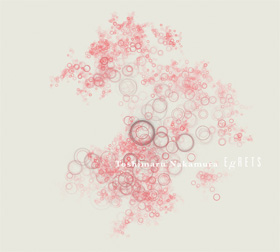
Toshimaru Nakamura - EgRETS (Samadhi Sound)

Not your typical Toshi album. There are four new "nimbs", numbers 42-45, all solo and quite a bit more consonant than what we expect from Toshi. I'm actually somewhat surprised he's able to draw these sounds from his mixing board but I guess he continues to find alleyways hitherto unheard. The nimbs are ok, a little woozy, though #45 stands out, its underlying violence reminding me of a toned down version of the sunspot cut on "between".

On the other four tracks, he's accompanied by Tetuzi Akiyama, playing acoustic and very sumptuously, and Arve Henriksen on trumpet. Perhaps a function of the label, again the pieces are much more user-friendly than even the other recordings Toshi's done recently with Swedish musicians. There are interjections of static and noise, to be sure, and Henriksen's trumpet pretty much stays in post-Dorner territory, but Akiyama's guitar tends to carry pieces like "Semi" where he's in very pastoral form, pure ringing tones. The more abstract efforts still come across as generally tonal as well, kind of like rough-hewn Fennesz. They're all solid, by and large enjoyable but not as strong as Toshi at his best. The exception, for me, is "Yura" on which I'd swear there's a bass clarinet in play. If that's a trumpet, Mr. Henriksen has opened an area on that instrument I've never been privy to. It's a marvelous piece, in any case.


Akira Rabelais - Caduceus (Samadhi Sound)

I'm not very familiar with the work of Rabelais, only owning the previous release on this label, "Spellewauerynsherde", which I more or less enjoyed. "Caduceus" is all software-processed guitar and once again, I'm forced to compare it to Fennesz. The music has a similar, underlying dreamy tonality gilded with a healthy dollop of granular harshness. Of course, this is an attractive combination but one senses something of the formulaic after a while, an ease of creation (kind of what I feel when manipulating contrast and color saturation on photos--good-looking results are almost too easy) that inches matters toward a kind of pleasant sameness. Around midway through the disc, Rabelais starts to rein things in a bit (some of the earlier pieces border on the bombastic) and the results are gratifying: simpler, plucked guitar lines over hazy noise and the like. Nothing earth-shattering, but having a more honest feel. Doesn't last long, though.

As with the recent Sylvian project, simply by virtue of being on his label, one hopes exposure to music like this will induce some small percentage of neophyte listeners to investigate further. For the rest of us--not bad, not mandatory.


Jan Bang - ...and poppies from Kandahar (Samadhi Sound)

Jon Hassell only appears on one of the eleven tracks here but there's a Hassellian cast to much of the proceedings, Jan Bang interweaving live instrumentals, studio processing, field recordings and other effluvia into dreamy, off-kilter soundscapes--dreamscapes might be a better term--that carry the whiff of the exotic. Maybe more than Hassell, I'm reminded of the late Hector Zazou, that kind of careful sampling, leavened with enticing electronica, quasi-ethnic rhythms from various climes, augmented by evocative vocals; Sidsel Endresen on "The Midwife's Dilemma", sounding more convincing than on the recent Kim Myhr/Trondheim Jazz Orchestra offering. The exotica can get over the top, as on the swirls of Arabic melodies that flit in and out of "Passport Control", but by and large, the journey is a comfortable one. There's nice trumpet work both from Henriksen (in smoother form than with Toshi) and Nils Petter Molvar, the latter on "Abdication and Coronation", a moody, lovely piece, probably my favorite from the album.

Again, a decent enough entryway into this particular end of the spectrum; not so sure how necessary it is for folks who have already made the trip.

samadhi sound

Monday, May 10, 2010


Jonathan McHugh/Mark Wastell - Hydriotaphia (confront)

Yes, yes, I had to look it up, though the "taph" was leading me down funereal pathways. McHugh, on ARP2600 and mixing desk, and Wastell, on tam tam, provide 3/4 of an hour of fantastically rich dronage. The slow throb. I'm not sure if McHugh is processing Wastell's sound or only generating his own but most of the non-cymbal presences, aside from some static and high-pitched sine-like tones, seems to reside in the metal-sheet area. With most music like this, much of the success lies in the layering, both the choices of timbres and the introduction and removal of elements--this pair accomplished that superbly. It's at once solid and aerated, pausing for breath, welling up and floating on. It has that kind of cloud aspect for me, some finely striated, complex gas approaching, hovering, passing by. Very, very enjoyable and thoughtful work.

confront, via Sound 323


Koboku Senjû - Selektiv hogst (Sofa)

Koboku Senjû is Tetuzi Akiyama (guitar), Toshimaru Nakamura (no-input mixing board), Espen Reinertsen (saxophones, flute), Eivind Lønning (trumpet) and Martin Taxt (tuba)--a wonderful mixture of textures, first of all. Those colors are always evident, enlivening a track or two that might otherwise stall a bit, but the better pieces, especially the first and last cuts, are small gems. Akiyama stays on acoustic and leans toward melodic blues references--this is key, I think, toward impelling the quintet into slightly more tonal waters, where the music really solidifies and takes off. Perfect balance is achieved by Toshi as well; he's really a central element here, his electronics leavening the horns. Reinertsen's saxophone gets a bit to saxophone-y in a Gustafsson sense on occasion, but the pieces are never less than satisfying and sometimes a good bit more. Something about the set reminded me, generally speaking, of the Beins/Neumann "lidingo" on Erstwhile; not sure what, exactly. Strong release, really fine at its peak, looking forward to seeing them in a few weeks.

They'll be performing, among other places in Philadelphia on May 28th. I'll be there.

Sofa

Saturday, May 08, 2010


Christian Munthe - Living Rooms (*for*sake)

Munthe is a Swedish guitarist who, I think it's fair to say, operates in the post-Bailey tradition. I find that a particularly rough row to hoe, the late Bailey casting a dauntingly huge shadow. "Living Rooms" is a disparate collection of performances, on 2 discs, recorded more or less in living rooms. Each leads off with a short solo piece but the remainder are collaborations. For myself, the success of the music here tends to rise or fall depending on these partners as Munthe's playing, at least as represented here, is pretty consistent. Though it's not really my cuppa, his scrabbling approach is able enough. So while I found Alberto Poppoia's clarinet work to be tiresome and overly idiomatic, I enjoyed Rachael Wadham's "cither.bow.things" very much, the pair of stringed instruments blending well and imaginatively on the final two cuts of Disc 1.

Three of the tracks on Disc 2 feature altoist Christine Sehnaoui including, interestingly, closing the album with a solo performance by her. I've still yet to hear something by Sehnaoui in a collaborative mode that's really moved me, but the solo piece here is fairly strong, especially the pinched tones that she still manages to infuse with air--very nice. My free vocal tolerance is admittedly low and I didn't derive much from the two tracks with Mariam Wallentin. My favorites on this disc are the three pieces by the quartet of Munthe, Kelly Jones (flute, pipe, percussion), Saga Munthe (guitar, pipe, percussion) and Pascal Nichols (drums, percussion); it's busy and scrabbling, yes, but the colors create a very vibrant field, relegating any fussiness to the wayside.


Christian Munthe - Blowing the Wind (*for*sake)

Nice idea, well executed. Munthe devotes eleven tracks to sounds made exclusively by blowing on an acoustic guitar, across its surfaces, through its apertures, around its strings. So, in a way, it's kind of a "vocal" album, I suppose. As with his guitar playing (at least to the extent I've heard it), his respiratory attacks tend toward the active and skitterish, sometimes incorporating vocalizations. I would have liked to have heard a few attempts in a quieter, more ruminative vein and also would have enjoyed at least a couple of lengthier tracks (all eleven here between about two and five minutes). But I appreciate the relatively spartan nature of this disc, the self-constraint imposed over its course, and it succeeds well enough on its own merits.


Christian Munthe - 12 Songs (*for*sake)

"12 Songs", a collection of brief improvisations on acoustic guitar, is on the whole my favorite of the three releases. While one would still be more or less forced to apply the label "post-Bailey", there's something of an extension in play as well. Too, it's an extension of the Bailey found on releases like "Drop Me Off at 96th", a more lyrical incarnation as well as being informed by (as I hear it) everything from acoustic blues to the kitharas of Harry Partch. The hard-scrabbling approach is still very much in evidence but the acoustic guitar tempers things a bit, I think, allowing more lovely resonances to emerge through the spikiness, and the brevity of the pieces, instead of inhibiting development, feels just about right, lending an air of the "miniature" that serves as a welcome focus. Actually, the song I enjoyed the most, "Song no. 7", abandons the strings entirely, sounding as though a handful of pliant twigs were struck and rubbed over the guitar body--quite beautiful. It's a fine disc overall; I'd love to hear further elaborations along these lines.

more info of all kinds can be found here

Went to Poisson Rouge last night for the first time. I had many misgivings about the venue itself, far more a "club" situation than I'm generally comfortable with, especially if I have the odd idea of actually listening to the music. A large basement room and bar, it has, for the last couple of years I think, been hosting relatively adventurous fare, which is to say to the right of Issue Project and the left of...I don't know, any dozen hipster places. What finally drew me there was the pairing of the Wingdale Community Singers and the reuniting, after some 20 years, of an incarnation of the Golden Palominos.

Not that I was expecting so much from the latter, but I was a big fan in the mid 80s and enjoyed some work off and on after that, plus I do love me some Wingdales. I'd originally planned to bring Linda but a harsh cough and blood pressure attack on the part of her sister on Thursday meant she couldn't really leave her last night. Happily, Carol could make it so off we trooped.

It was an early showtime (a third band opened)--7PM and we arrived about 6:45 to see about 25 people on line outside. My doubts grew upon seeing a bouncer-type near the door (somehow, an unnecessary proposition when Keith plays here) and worsened when another fellow came down the line tying a plastic band around our wrists. It was prompt, though, and we filtered down the red-lit stairs into a large dark room with a low stage to the left, a bar at the rear, an elevated (reserved for folk more special than us) area and....only about eight tables. I think they adjust on an individual basis as to whether the room is to be set up with more sitting/eating options (they serve food, after a fashion) and decided this event, attended to largely by people around my advanced age, would prefer to stand and rock out. Um, no.

Luckily, Carol and I managed to snag just about the last set of two stools and a little table, off near the right side of the stage area. We satisfied the two-item minimum (and then some) and nestled in.

First up was The Walking Hellos, an all-female quartet with banjo/accordion, guitar, bass, drums. They were moderately enjoyable, the brief songs tending to get stuck in a certain kind of rut where the piece would shift from delicate and dreamy to darkly, strongly rocking, with a touch of prog edge. Competent, a bit of fun but not too memorable.

The Wingdales were up next, the basic quartet (David Grubbs, Nina Katchadourian, Hannah Marcus and Rick Moody) augmented by double bass and trumpet. I'd seen them at Issue Project last year and have their most recent disc, "Spirit Duplicator", both of which I liked--this show blew them away. Grubbs had been unable to make the ISP gig and his presence, though not really so pronounced, lends a real fine balance to the band; you have the impression of four strong, different personalities up there managing to blend into a wry, unassuming, sharp and extremely perceptive whole. I've still been unable to come up with a better capsule description than post-Roches, but while that applies most obviously on the vocal harmonies, it's also on the lyrical front, though the Wingdales are perhaps a touch more removed and ironic than the Roche sisters. But their observations are wonderfully street-bound and incisive, sadly funny, bluntly political, gorgeously sung and arranged. I sat there throughout with a dopey grin on my face. Great set.

As I said, my expectations of the Palominos were fairly low, just hoping for a fun gig. The crowd had swelled, the standing area full. This assemblage included Fier, Jody Harris, Tony Maimone and a couple of other guitarists whose names I didn't get (and who, I think, had only worked sporadically with the group prior) and, of course, Syd Straw. For the first 2/3 of the set, they pumped out the kind of thick, C&W tinged rock one heard on the second and third albums, including several pieces from same. They were quite tight and juicy, Straw in good form (though she almost radiated "diva") really enjoying herself and staying just this side of obnoxious. All told, it was kind of fun though, as I told Nina when she came over to our table, I really far more enjoyed the Wingdales.

A little bit earlier, Carol had anxiously glanced over a few feet to our right, worried that an elderly gentleman with a cane didn't have a seat. Just as she was about to bring her stool over to him, someone got him a chair and our worries were assuaged.

That turned out to be Robert Kidney. After about six or seven songs with Straw, he took the stage and the band was transformed. No cane needed. What a performer! I barely know his work, really only the name and the track or two he did with the Palominos--someone will have to clue me in on why he's not far, far better known. A commanding presence, belting out lines in a deep, scary baritone, jowls quivering, fingers pointing, spitting invective. Man, was he good. The band fell into line behind him, becoming way more raunchy and blues-drenched. I know he's part of The Numbers Band but have no idea if that music is on this level.

He departed, Straw came back for a couple of songs, the crowd roared.

So, not remotely akin to my normal concert-going routine but you never know. One and a half fantastic sets of music (Wingdales = 1, Kidney = 1/2), well worth putting up with the club nonsense and setting. At least once in a while.