Over at Old Jews Telling Jokes, Dan Okrent tells one I found quite funny. Check him out, on the bottom left.
Reminded me, though, of one of the more intriguing kind of games I once experienced. It was at one of the US Open crossword tournaments held at NYU which I attended from 1983 - '86, iirc. Pre-computer scoring era, there was always a good deal of time to occupy while the judges were tabulating the scores from 250 contestants, six puzzles each (? I think it was six). One of the ways Will Shortz did this was by conducting group participation games. Nerdy group participation games. As you might imagine, even the word-geekiest of us often found these a chore but once in a while he came up with a subtly fascinating one. Such was the case with what I call, "Second Most".
The set-up was simple. Will read out a category, the set of which was intentionally simple to describe. For example, "Name a state that borders the Pacific Ocean". You would write down your answer. A count would then be taken for each response. Here was the catch--points would be awarded only to that group of people who chose the second most popular answer. They would receive the number of points equal to the number of people who voted as they did.
So in the above example, upon hearing the question, one might immediately think, "California" but then say, "No, everyone's going to say California, so I don't want to pick that." On second thought, however, one might reconsider, "Wait a minute. Everyone's going to think everyone else is going to pick California and not pick it, so maybe it would be a good choice." "But if everyone's thinking that...." The recursive effect of this kind of thinking, related in a sense to Prisoner's Dilemma, was much fun to attempt to unravel. Would people bypass Washington, defaulting to Oregon? Might Hawaii squeak into second place as a dark horse? Are people really thinking this through like I am? (Come on, it's a crossword tournament. Of course they are.)
Will ran this through six or seven rounds, the "winners" tallying up their point totals. A prize, doubtless a dictionary or some such, was awarded for to the champion of the Second Most game.
This individual, naturally, was the contestant with the second highest point total....
Friday, July 10, 2009

Saturday, July 04, 2009

I'm going to cheat a smidgen. I bought this album when it originally appeared, in 1974 or '75 I think, but it was purloined a few years later. Eventually I replaced it on disc and that's what I'm listening to now.
I understand, post-AMM, that Frith doesn't come in for a lot of praise, at least as far as proto-EAI goes. Some of it's not quite his fault, ie, getting credited with many of the technical innovations actually created by Rowe simply by virtue of being far better known. Frith knew AMMMusic as a youth but the first time he actually saw Rowe perform was with People's Liberation Music in 1974 or so. Not what he expected and nary an extended technique to be seen! He maintains there was no direct copyage, that things like bowing the guitar, using alligator clips, etc. were "in the air" and I think it's reasonable to take him at his word.
He never followed any real AMM-like aesthetic either, presumably another reason he tends to be ignored by eai folk. And, to be sure, his work was never so consistent, at least to the extent I was able to follow it. But there are nuggets to be found.
As always, a large part of one's appreciation has to do with when one encounters a given artist. His first guitar solo album was also my first exposure to his work (not counting having heard some Henry Cow, I guess, in the record shop, but that didn't stick with me). It was quite a revelation. I knew Bailey already, though minimally (Music Improvisation Company and his duos with Braxton, I think that's all at the time) but that was probably as close as I came to this kind of playing, which is to say, not very. For that matter, I'm not sure if I'd heard a solo guitar record either. (? not that I can think of) He does sound fairly unique here--you can hear some Bailey, some Fripp, some Zoot Horn Rollo maybe, but I really don't think, plus or minus, there was much around like this in '75. If there's a certain clumsiness in play as compared to Rowe in AMM (though recall, at this moment, Keith was strumming away with PLM), there's also a kind of romantic beauty, a wistfulness in pieces like "Glass c/w Steel" and, especially, "No Birds" which, for this 21-year old listener, was a summa of experimentalism and knock-yer-socks-off bravura.
It was certainly one of the key ear-opening records of my yout'.

I think I picked this up in the Summer of '76. My copy has a circular green sticker on the front saying "Recommended Retail Price £1.59" so I'm guessing it was an import into the shop in Poughkeepsie where prog was king. Its noteworthiness for me isn't to be found in Frith's contributions (which are fine) but in Bailey. This would be my third exposure to him but the "purest" so far. It's one of those musical things I really kick myself for--I liked the three tracks very much but shortly fell into my "if it wasn't AACM-oriented avant jazz (or similar) I wasn't interested" period which included a general antipathy toward efi. I wouldn't really rediscover Bailey until his own Guitar Solos, vol. 2 in 1990. Three beautiful, short, gentle pieces by Bailey here, though, including one with voice, "The Lost Chord" that's just fantastic.
Frith's "Water/Struggle/The North" is actually quite good, maybe a step behind "No Birds" in solidity of conception though with a refreshing raggedness.
Whatever became of G.F. Fitzgerald? I take it there's a 1970 LP, "Mouseproof" (review of that disc hereand a duo with Lol Coxhill from '75 here). From the evidence here, he sounds like a rockier Frith, scattered ideas not really coalescing.
This was also my introduction to Hans Reichel, really my only exposure to him for probably 20 years. Again, silly me, as these are very attractive pieces and I thought so at the time. Not that Reichel records were easy to come by, even so. To this day, I don't own a Reichel album! Recs appreciated...

Tough not to smile when listening to this 1983 release, a collection of pop songs, more or less DIY with generic drum samples, (intentionally) cheap Casio tones, goofy vocals that nonetheless slide easily enough into the bitter (Some Clouds Don't [have a silver lining]", "Same Old Me", "One loving lick from a little pet dog can kill"). Not as slight an album as it might seem at first blush, very enjoyable to return to.

I'm guessing this isn't held in very high regard by experimental music fans with an appreciation for acoustic blues. Kaiser's rep is pretty low (often deserved) and two white guys tackling Skip James amidst mid-80s, drum machine, fractured avant-rock; well, not a formula for critical success. But I think this was my first taste of James, albeit second-hand and, though I'm still woefully laggard in updating my acoustic blues knowledge, it did open the door a wee bit. Those two James tracks (Hard Time Killin' Floor Blues and Special Rider Blues) aren't really so bad; honest attempts anyway. The rest--well sometimes they're little machines that chug along ok ("The Golden Eighties"), other time Beefheartian takes ("One of Nature's Mistakes); not bad, but not so interesting today.

Not sure why I have this filed here instead of "S" but because I like it so much, I'll play it anyway. One of my favorite avant-rock albums of the 80s, Frith with Tom Cora and Zeena Parkins. Lot of risks here, sometimes totally over the top, often gorgeously lyrical, almost always bitter, bitter, bitter. And incisive. (I didn't realize until just now that "Man or Monkey" was a Cassiber album/tune?
Eve didn't make a monkey out of man
She made a man out of a monkey.
Get down out of that tree!
Great mix of extremely catchy songs, folk melodies and noise. Quite an explosion of imagination in this context, a wonderful record, possibly the best work I've heard from all three involved.

Was never crazy about this one, from the 4th Victo festival in 1986. Still not. Way too much bravado, a lot of really aggravating vocalizing, drum machines, etc. Everything that was wrong with the extended prog scene in the 80s. Take it off.

This was the last Frith LP I bought. I did continue to follow his work up to maybe 2000 or so (Pacifica, on Tzadik, which I liked, is the last I've heard). From 1987, it's two LPs. The first a quartet with Zorn, Tenko and Christian Marclay, though it often sounds like solo, overdubbed Frith. It's ok, some of it works, but there's a stiffness in play that, to me, plagued a lot of Frith's work from here on in. He's such a great melodic player, especially on violin, that the kind of rigid, almost martial rhythms and lines here just fall short. I recall liking this pretty much back when but this is a good example of something just not holding up. Between the basement tech of "Cheap at Half the Price" and, presumably, more recent digital work, this period sounds like a gawky adolescent.
For the solo album, Skeleton Crew and other bits and pieces, I'm appreciative toward him. Thanks, Mr. Frith.

Been quite a while since I had the luxury of dipping back into my vinyl for some leisurely listening and reconsidering. As it happens, I had finished up the E's last time around, so...
[Curious that I have no Fa's in the waxworks. No Jon Faddis, Gabriel Faure, Nanette Fabray?]
I'm guessing I read reviews of Fell's work in Cadence, maybe in early issues of the Wire, and was intrigued by comparisons to Braxton, Mingus, Stockhausen, etc. I think I picked these up after "II" was out, presumably around '92. Can't say I ever, erm, fell under his sway, at least in this guise. The proto-deconstructivist aesthetic at play just seems to me to be basically at odds with the black jazz experience at the heart of the music. It ends up being somewhat dessicated and astringent, a mouth-puckering experience instead of a saliva-generating one. Not that the latter was Fell's purpose; my recollection is that he was trying to apply strict serialist technique to jazz composition, among other things. Just seems like a quixotic idea; why invest that heavily in, say, Mingus, if you're only dealing in surface aspects of his work, not with the meat?
Maybe it's just that, given much of the source inspiration, I'm unable to listen to it as "not-jazz". I should mention that I've enjoyed Fell's work very much in other contexts, notably the very first Erstwhile recording (Fell and Hession are both on Compilation II ) and the wonderful IST Trio which I had the good fortune to witness at Tonic, whereat Mr. Fell inflicted hitherto unseen-by-me tortures on his instrument (and parts of his own body, including using his left ear to fret the bass as well as bowing over his own hand atop the strings) that were mighty impressive.
Here, there are certainly snatches where he eases up on the reins and lets the band more or less fly, though it always sounds as though constraints are in effect. Might it work better with other musicians? I'm not overly familiar with most of the band at hand; hard to say if better could have been had.

Compilation II is, largely, a definite improvement, far more full-sounding though still far, far short of real interest. The conception is healthier enough that I find myself dwelling less on its aridity and more on the shortcomings of the soloists! None of whom, with the exception of Fell, I find too compelling. Even so, it begins to dribble and drag after a decent start, the ghost echoes of the back-line sounding too contrived, the electronics too doodly. I'm sure I'm "listening wrongly" but it just doesn't do much for me.

Of course, one of the fun things about surfing through one's vinyl like this is the juxtapositions that inevitably occur. Here you have the hyper-serious Mr. Fell with an very complicated project that pretty much leaves me cold and right next door you have one of the avant's silliest supergroups, but I'll be damned if I don't enjoy "Live, Love, Larf & Loaf" a damned sight more.
I didn't really know Richard Thompson from a hole in the ground when this came out and, honestly, my working knowledge of him has hardly improved in the meantime, but the other three were well-known quantities and, for their first effort (I repeat, for their first effort), they put together an enormously fun album chock full of solidly crafted, often quite amusing and imaginatively wrought pop songs. Frith's "Where's the Money" is one of the most sardonically bitter rock rants I know and to follow it with their extraordinarily goofy take on the Okinawan ditty, "Hai Sai Oji-San" is just inspired. Even "Surfin' USA' works. Thompson's faux sea-shanty dirges are an acquired taste, I guess, and I'm not sure I'd be so interested in hearing much more, but they fit just fine here. I think this was the first I'd heard French since Drumbo days, so that was an added thrill; if he's not so absurdly creative out from the Beefheartian umbrella, he's still perfectly serviceable. Good record, well worth checking out.
I emphasized "first" above because the next one by this quartet, which appeared for some baffling reason on Windham Hill, might just possibly be the worst piece of crap ever to appear, however briefly, in my collection. I only retain vague, unsavory memories at this point (happily) but I know that, in fairness, I put it aside for a while and gave it a second taste. It remained retch-inducing. Man, was that foul.
*************
Have a couple of Ella Fitzgerald records but I've declined to spin them, no offense to her or her fans. Saw her in Paris, in 1983. Kinda fun.
Oddly, given the FFKT album, I next have the back-to-back ensleevement of Mssrs. Frisell and Firth, themselves entwined in a good bit of activity. Again, I can't bring myself to listen to the Frisells (Smash & Scatteration with Vernon Reid and Before We Were Born)
The Friths are another matter though, but they deserve their own post.
****************
btw, I've picked up, and am listening to now for the third time, the Rowe/Ambarchi performance of four pages from Treatise that recently emerged on the Italian Planam label (LP), a set from February of this year. Mighty tasty.

Nicholas Szczepanik - The Chiasmus (basses frequencies/sentient recognition archive)
This disc is bracketed by two very brief but extremely loud and harsh bursts of electronic noise, as though Szczepanik was marking out territory for future use, even if the bulk of the music contained herein resides in the general area of complex dronage as heard in the work of Richard Garet, Asher and others, where there's often much more occurring than meets the ears at first blush. He'll intertwine textures that set each other off well (a rich hum with a scratchy, airy whoosh, say), underlie them with a pulse that's more sensed than heard and then elaborate the edges with other colors; these last are the ones it takes me a while to realize are there but, once picked up, add immensely to the overall picture. As ever, those choices are key. While always well-crafted, certain options can veer things toward the bland, as happens for me on "The Silhouettes of a Winter's Sunset". But by and large, Szczepanik skirts these dangers and fashions piece that are both immediately enticing and repay deeper listens. The final cut, "Lose Yourself...", by all rights should have been exhausted several minutes in but, at the end of its 19, I found myself still discovering new relationships between sound layers; can't ask for more. Curious to see where Szczepanik goes from here, especially given those two warning flares.
szczepanik (the disc arrives with a 16-pages booklet of quite complimentary photos by Avery McCarthy)

Y.E.R.M.O. - Collision Zone (Idiosyncratics)
Y.E.R.M.O. is Yannick Franck and Xavier Dubois (with additional drumming from Jason van Gulick. It's mastered by James Plotkin; I might not have thought of OLD without that prompt but once triggered, you can hear something of an affinity. Five tracks, though presented as a single work, it hits the ground running, pounding away like a roaring flood through a narrow tunnel, reverberating, scouring. In the third section, some acid-tinged guitar intrudes inevitably (for me!) summoning "An Index of Metals", but lending a more rockish air to the piece, the drums forming a more regular rhythm (á la Branca), something I'd rather not have had surface. A couple of times, it billows out into a less ruthless area, though still smoky and troubled. Not really my cuppa, but for aficionados of 90s Isolationism (with maybe a nod toward Godspeed!) and extensions thereof, Y.E.R.M.O. delivers the goods.

Hapsburg Braganza - Hatchling (Idiosyncratics)
Phil Begg weaves sounds derived from acoustic instruments and field recordings into a rather enchanting warp and weft. He uses many rubbed sounds, creaking door-type, layered into soft ringing, gentle water lapping, odd muffled buzzes like alarm clocks under a pillow and much more. He dwells overlong in some areas, as in a harmonium/water "duo" midway through, though the harmonium drone eventually seduces. Still, the complex interplay heard at the piece's inception isn't quite maintained throughout so that by the quiet birdsong at the end, I'd drifted away a bit. Which perhaps is intended.

Phil Maggi - Blue Fields in Paramount (Idiosyncratics)
From the back cover, I expected something like a series of songs and, in a way, that's what it is, except that the songs are formulated from a recombination of field recordings in and around Zagreb and samples from various musics, local and otherwise, transformed into a cinematic kind of soundscape that recalled, for me, the work of Benjamin Lew, but with greater urgency. It's a fine line in this type of project between mere exoticism and unearthing some new connections but more often than not, I found myself buying into Maggi's concoction. He keeps his foot on the repetition pedal a bit long toward the end of the disc, finding a Riley-esque groove he enjoys, but the disc is overall a not unpleasant wallow.
idiosyncratics
Friday, July 03, 2009

Daniel Jones/Ivan Palacky/Jez riley French - Tierce (engraved glass)
I'm increasingly at a loss for things to say about work like this, especially when I enjoy it, which I very much do in this case. Descriptions are inevitably feeble but simply observing that it somehow conjures up a situation, a place, a real or imagined environment and does so convincingly doesn't do justice either. I will say the trio (Jones, guitar, turntable, contact mic, objects, mixer; Palacky, Dopleta 180 amplified knitting machine (!); French, field recordings, guzheng, zither, objects) strike a delicate balance, managing to capture something of a field recording feel in their improvisations (certain taps, for instance, evoking the naturally irregular rhythms of water drops), that the performance tumbles along like a quiet stream over a complex bed. It's really, really good (a 3", by the way) and you should hear it.

Jez riley French - AS(urfaces) (engraved glass)
Interesting (if unfair) to compare to the above release; one of the same participants but solo, in a more purely field recording-oriented release (though French bows or otherwise touches various surfaces on three of the six tracks). Here, one's reaction I find often depends "simply" on how intriguing one finds the given sound-field in play. Even there, you're almost compelled to give a deeper listen if, initially, you're not so fascinated; often there's more at hand than you thought. The one unenhanced cut that I immediately loved was the fourth, "as030", which features a motor of some kind (I think), perhaps on a boat (sounds a little watery); it's strong, subtle and varies hugely within a narrow focus. The lengthy final track, the one on which bowing can most clearly be discerned, works pretty well also, a rich range of rubbing-induced groans. It might stagnate somewhat on disc due to its run-time, almost a half hour, but one can easily imagine wallowing it it with pleasure in an actual installation. It's a good disc, but the fine interaction heard in the trio recording puts that one well ahead for me.
engraved glass
Wednesday, July 01, 2009

Günter Müller - Cym Bowl (Mikroton)
This, along with the subsequent disc, are the first two CD releases from the Russian label, Mikroton (after several MP3 issues). Müller, for this album, has processed a large amount of recordings derived from cymbals and singing bowls, molding and twisting them into a steady stream of vaguely cymballic sound. Listeners familiar with his work will have a reasonable idea what to expect: a pulse that's at least implied (often overt), a blurring of edges, a generally warm tone even at its most industrial. Fair enough, but there's something of a progression in play from the blandly attractive opener to the more troubling "Third Cym", where Müller manages to evoke more than mere sonic effects. Still, the overall tilt is toward the kind of relatively featureless, anonymous music he's been, more often than not, producing over the past few years; I always find myself yearning for someone to throw some sand in the gears.

Alan Courtis/Jaime Genovart/Christof Kurzmann/Pablo Reche - Palmar Zähler (Mikroton)
Kurzmann (lloopp, clarinet, voice) spends a good bit of time in South America and is here joined by several musicians from Buenos Aires: Courtis (homemade violin, contact mic, mp3, tapes, processing), Genovart (recording, synth, soft [sic]) and Reche (minidisc, ipod, alesis nanoverb, korg MS10). At its best, as on the second track where Kurzmann wields his clarinet (a crucial element in the whirling drone), the quartet creates a very rich swirl of thick, nodose textures with more than enough interior detail to satisfy. Kurzmann intoning "As Tears Go By" over threatening hums and rumbles works fairly well also. Elsewhere, they succumb somewhat to the homogeneous, if pleasant, kind of electronic improv often heard from For 4 Ears in recent times. Not bad but not special.
mikroton
available stateside via erstdist
Monday, June 29, 2009

Phosphor - II (Potlatch)
Waves of crunchy goodness. I saw Phosphor in Nancy, in 2002 (I guess just after their first recording?) and the performance has stuck with me; the largish ensemble with an unusual combination of sounds, balancing the electric and acoustic in a unique way, and tending to straddle the edge of the audible. So I was somewhat surprised at how...rambunctious this release is and, initially, may even have been a bit put off. Silly me. It's knotted, abrasive and gnarly all right and all the better for it as the palette has substantially widened and the concern with improvised structure is thereby foregrounded. That palette is interestingly recognizable--I think I'd pick this band out in a blindfold test, something about the combination of the grainier (Beins, Krebs) with the harshly airy (Dorner, Hayward) and the relatively smooth (Renkel, Schick), with Neumann as a wild card, combined with the clearly high level of musicianship, sets this group apart.
So even while the character of the tracks varies widely, and it does with respect to volume, density, fluidity, the overarching tone says Phosphor. That previously mentioned structure is felt throughout; there's a real built aspect to the music, a fine plasticity. A kind of gracile blockiness emerges, a stumbling forward that's balletic. New angles protrude consistently, right up to the last cut with its plangent plucked strings.
One of the stronger releases I've heard this year; get it.

Narthex - Formnction (Potlatch)
OK, talk about yer conceptualism. I think what's the case in the first of the two equal length tracks is that the sounds originally produced in six improvised situations by Marc Baron (saxophone) and Loic Blairon (string bass), after having been resegmented into six excerpts thereof, have "simply" been replaced by two sine tones of 1000hz and 500hz, any ambient sounds having been digitally erased. Most of the source performance was, presumably, rather spare, so one is presented with one of two tones, occasionally overlapping, laid amidst pure silence. It could be dry as a bone, but somehow it's not. Richard, in his write-up mentioned repeated xeroxing; I found myself thinking more of the solarization process used (still?) in photography, wherein the image is increasingly abstracted toward either black or white, often resulting in a kind of fine line drawing. It has a resoluteness that's ultimately winning, though it'll try many a listener's patience.
Bold move to place that cut, the supremely spare one, first. When the second, acoustic, version appears, it's difficult not to feel that someone's thrown open the windows. Fascinating to re-hear the sounds in their "natural" state, all the depth and variation (though still spare) that was transmogrified previously. Again, these are six five-minute excerpts from 1/2 hour performances (the first five from the first, the second five from the second, etc., therefore accesses more or less randomly). Still, as a suite, they're kind of wonderful: smudges, taps and punctuated shrieks, unhurried but urgent.
A unique release, one I quite enjoyed.
potlatch
Saturday, June 27, 2009

This was a somewhat different vacation than most as one of the main purposes was to try to get a feel for what it might be like to retire to this region, that is, Northern Spain, particularly Asturias. So, much of my mental energy was spent weighing the pluses and minuses of a given area, how comfortable or not it felt imagining actually living here (oh, and taking Linda's feeling into account as well!)
We agreed that of the places we visited, we loved the area around Llanes, especially the lovingly named hamlet of Poo. Llanes is a small town (pop. about 8,000) that caters to tourists in the summer months but is decidedly pleasant for all that. Poo is 3K (see, how I'm already adopting that bizarre measuring system?) to the west, a collection of houses splaying out into the adjacent farmland as well as having its own beach or two; the north coast is lined with hundreds of these small, scalloped beaches, gorgeous little tracts. Gijon, a city of some 280,000 is also quite attractive, but at the moment we're gearing more toward a quieter area. We'll likely return in a couple of years, spending a couple weeks in the Llanes area, scoping things out more thoroughly.
Some pluses registered during the trip:
--the landscape. Included in this area, the relative undevelopedness of the region. Asturias, the province, has a population of 1,000,000 or so and it's a only bit smaller than Connecticut. More than half of this is concentrated in two cities, Oviedo and Gijon, so it's pretty wide open. As the distance from rugged seashore to sizable mountains tended to be only five to ten miles, the terrain was wonderfully vertical with nary a flood plain to be seen.
--the people, who almost to a one were exceedingly pleasant. Bland maybe, but pleasant. I don't think I ever encountered a street argument, rarely heard more than one or two car honks a day. Everyone was relaxed, ambling around taking paseos, a wider generational range than you find in NYC. Now, some of this pleasantry doubtless stems from the racial homogeneity in play which is a bit uncomfortable. I'd say 98% plus of the folk we saw were Spanish with a smattering of Africans (Nigerians, I think, relegated almost exclusively to the street sales of knock-off bags and such) and Central Americans (more often than not, begging); I'm not crazy about this. Then again, there's virtually zero US tourist presence there (a good thing!) so I suppose I stand out a bit as well.
--the food, uniformly excellent. Amazing seafood everywhere, great bread, the sidra, the fabada....
--other small things: cell phones exist but you don't see three out of every four people with the things permanently affixed to their earholes. Ipods also exist, but I almost always only saw them being used by joggers or bikers. Not sure is these two things are economically derived or stem from social conventions, but I'm hoping the latter. Drivers are polite. Fast, but polite. You see many public workers acting to clean or beautify the area, planting flowers, trees, etc. One night in Gijon, there was a festival of some kind, fireworks at midnight. The next morning when I went up to my favorite park, there was party debris--bottles, paper and other garbage--strewn across one side of a hill there. I came back two hours later and it was gone. People seem to take care with small details as a matter of course. There was a general sense of respect between citizens that you don't find here. Very little police presence and zero sense of impending criminal activity. Beautiful, small beaches with incredible rock formations. Caves with neolithic paintings (I visited one, Tito Bustillo). Old buildings; we stumbled across, outside of Oviedo, the oldest standing Christian church in Europe, built in 872. This doesn't happen often in Jersey City.
Minuses, insofar as actually living there:
--The isolation. I couldn't have imagined even considering the move pre-Net but even so, one has to deal with great distance between friends and family. A vacation is one thing, not sure how that would play out over a longer term.
--As nice as the people were, I didn't get the sense that there was a huge amount of intellectual or aesthetic ferment in the area. I could have easily missed it, of course, and am aware of several compadres around here in Galicia but, for example, bookstore sightings were rare and I didn't notice any performing spaces or posters for same. Not even music clubs. Outside of Bilbao, few modern art museums or galleries; in fact, now that I think of it, I don't recall seeing a single gallery, even an awful one, in Gijon. So there's some concern there.
And too many men were wearing pastel-colored sweaters tied around their shoulders. Far too many.
Anyway, a decision won't be made anytime soon. We'll likely go back in a couple of years, spend two weeks around the Llanes area, investigating more thoroughly and see where things stand then.
As is, I can only recommend visiting there yourselves. It seems to be entirely off the US tourist map; reason alone to go there.
Friday, June 19, 2009

So, in Gijon now for six days, stationary enough to try and post something.
(btw, extremely beautiful here in Northern Spain. Unbelievable landscapes, very lush, very dramatic. We just came in from the tiny hamlet of Poo, just outside of Llanes, a gorgeous, tranquil place to which I hope to return.)
We were in Bilbao for a couple of days, the primary purpose to visit the Guggenheim there. The third floor, which houses its permanent collection, was closed for new installations, something of a disappointment. I saw there was a large Serra install, though, several enormous pieces similar to those at DIA Beacon, laid out in a long room. Very enjoyable, as always, though it's interesting, I find his works fare better in rooms in which they barely squeeze in, where the space becomes at least a bit oppressive. Minor quibble, though. Off to one side, there was a room with models, drawings and a video interview of Serra, which was quite good. I was sitting there, watching/listening, when a horde of schoolchildren found their way into the main exhibition space. As tykes are wont to do, they entered the sculptures and a crescendo of hoots and hollers began. Little by little, it overwhelmed the voices in the video, rendering them entirely inaudible. It was a wonderful effect.
In the atrium were hung several white automobiles with "explosions" of light bulbs issuing from them. This was the intro to the exhibition by Cai Guo-Qiang, but the effect was more like an elaborate auto showroom. I'm not sure which part of which cave I've been hiding in, but his name only rang the vaguest of bells with me and I had absolutely no idea what to expect. The initial rooms featured several large "drawings" made with gunpowder as a primamry ingredient. Some were quite attractive, studies for large scale projects, the nature of which I didn't yet understand. Venturing further in, several video monitors made it apparent that Cai had been involved in performances involving pyrotechnics of all sorts. The videos from the early and mid 90s had a nice raw, guerrilla-like aspect to them; you had the impression that they hadn't all been officially sanctioned.
At one point there were dual projections on a single wall, side by side. On the left were more of the raw events of the kind viewed previously. On the right was footage from the 2008 Olympics ceremonies. Now, I had heard about the spectacular nature of these displays but I retain an aversion to the whole Olympics deal, specifically the nationalistic aspects of it, and I'd watched almost none, none of the ceremonial parts certainly. So I sat there thinking, "Hmm...Nice juxtaposition between the harsh, dark "outlaw" things Cai's doing and the slick, kitsch-filled Olympic crap."
Oh, wait. It's the same guy. D'oh. I'm not sure exactly to what extent Cai was responsible for the Olympics stuff, but the range of his work started to come into focus. There's some beauty there but, perhaps as his fame increased, there's middle-brow shallowness as well. (The 29 footsteps of a giant in the sky was very cool.) It's irritating, really, especially when combined in a single work like Head On:

Visually, nothing if not spectacular, you kind of want to apply your own reading, even if it ends up coming close to the artist's which is, essentially, illustrating communitarian group-think, insofar as it can achieve great cohesion and beauty (the arc) but eventually crashes hard into reality. OK, not an earth-shaking pronouncement, agree or disagree. It's a shade or two too explicit.
Many of the works benefited by not peering too closely at their explicit meaning. The black fireworks, one example pictured above, are an example. I found them quite beautiful and evocative on their own, kind of like ink stains on the sky, before being informed of their nuclear aspect, a point made well but perhaps with too much of a sledgehammer, in the manifestation of a black and grey mushroom cloud in Hiroshima.
The gunpowder works also, as lovely as a given image might be, couldn't shake off a gimmicky aura. I imagine other artists have utilized a similar approach. I know that Dali did some engravings of a religious nature worked from plates onwhich nail-filled granades had been exploded, back in the late 50s. More to the point, Cage's smoked paper drawing are quite beautiful; the viewer doesn't particularly notice the smoke in lieu of the entirety of the image. With Cai, once attuned to the process, it interferes with the totality of the work, at least for me. I flickered back and forth between having a quick liking of a work, followed by diminished enjoyment the longer I looked.
But, I have been thinking about it for the last few days, so I do think there's something in there, often.
otoh, it didn't hold a candle, so to speak, to the horse in the Tito Bustillo cave:

Friday, June 12, 2009

Lee Patterson - Seven Vignettes (Shadazz)
Seven fine works having as their common thread the enhancement of small sounds, the unearthing of forests of detail from sources that most would consider arid. Struck matches, decaying spring boings, burning hazelnuts (! especially amazing!), butane lighters, blown-upon pine cones and more. My reference point for explorations like these, more so here as several involve combustion, is always Xenakis' awesome "Concret ph" which amplified the pings and pops encountered in burning coal if one listened closely enough. These approach that rarefied atmosphere, more than once. The range of sounds, their sheer, often alien beauty, the textural shifts within a given piece--all are handled extremely well, each track standing solidly as a full (though potentially borderless) work. The last piece, "Plateau #1", is almost symphonic in character, a gorgeous welling-up, subsidence and re-emergence of a sound-field at once hollow and agitated but with a subtle richness like a patina on an old sheet of bronze. Wonderful piece and a beautiful recording overall.
Richard's excellent and more detailed review may be read here
Ordering info: fowl@cenotaph.org (I think erstdist has it as well)
*************************
Leaving tonight for a two week vacation in Northern Spain, tootling around from San Sebastian to Bilbao to Llanes to Gijon. May or may not have connectivity en route, so see everyone back here around the 27th.
Monday, June 08, 2009

Ruby Ruby Ruby - The Shadow of Your Smile (Zarek)
This generated a little bit of noise over at IHM and I'm afraid I fall into the camp that when all is said and done wonders, "Why?". Ten standards--one is tempted to say "warhorses"--associated with Billie Holiday, ably sung by Margareth Kammerer (also on guitar), backed by Derek Shirley (bass) and Steve Heather (drums), with occasional contributions from Michael Thieke, Axel Dorner, Tobias Delius (tenor sax) and Tom Meadowcroft (organ). I'm not sure it would have worked had they chosen to entirely deconstruct the songs but here they choose to play it virtually straight. Aside from some interesting accents, on a couple of the tracks, from the organ and Thieke's clarinet (easily my favorite moments on the disc, along with the slightly odd treatments of "All of Me" and "How High the Moon") it sounds like nothing so much as what, I suppose, one might encounter in a Berlin bar featuring a mainstream trio. It's fine, it's decently sung and played (nothing incredible, though Kammerer effectively captures some of Holiday's grit and rawness on pieces like "God Bless the Child") but one wonders at the rationale. And how could you not include "Strange Fruit"? More a curiosity than anything else; it's ok, really, and Dorner's solo on the "hidden" track, "Misty", is rather lovely but overall...well, I can't imagine listening to it often, but I guess it does its job well enough, and is even fetching at times. Still....

Snake Figures Arkestra - Cooks and Devils (Zarek)
Ignaz Schick (turntables, objects, organ pipes, bows, electronics) & Marcel Turkowsky (modified walkmen, realia [sic] objects, memory box, tapes). A 3" disc and a fine one, almost 20 minutes of swirling, squeaking, whistling, wheezing, banging density, imaginatively colored, well paced and texturally inventive. Nice industrial edge to much of it, very grimy feel, all to the good. Why Arkestra? No idea, but this one's the all-around, non-qualified pick of this particular Zarekian litter.

Perlonex/Charlemagne Palestine - It Ain't Necessarily So (Zarek)
Whoo boy. I suppose I could simply opine that the sections where Palestine doesn't sing are fine, excellent really but the ones in which he does, which make up a substantial portion of the 90 or so minutes here, are anything but. Perlonex (Ignaz Schick/tube sine wave generator, looper, objects, turntable; Jorg Maria Zeger/various guitars, stomp boxes; Burkhard Beins/selected percussion, objects, small electrics) accompany Palestine (grand piano, vocals, cognac glass) in three improvisations that seem to be based very loosely around the chord changes of the Gershwin tune, even when the vocals are absent. On the first piece, the piano is played quite sparingly and works especially well with Beins' buzzing percussion. The music builds, swelling wonderfully, Palestine beginning to attack the keyboard in his patented fashion. It's very exciting and I was thinking, "Wow, this is pretty great stuff." And then.
And then, about a half hour in, ol' Charlemagne starts to sing. Remember Roswell Rudd's brief but hilarious vocal forays on Escalator Over the Hill? Well, that's what hit me first, a similarly gnarled, bluesy voice, humorous in its smallness. Humorous in another context, that is. Here...it kind of brings things to a shuddering halt. Palestine scats (if that's the appropriate term) nonsense syllables to the song's melody, sounding quite the constipated old guy. The voice wafts in and out for the remainder of the first track (all of disc one), growing more, er, strenuous, as time goes on.
The second track begins with fine solo piano of the "strumming" kind, then a rich percussive interlude before Palestine rejoins; again, a fantastic opening, some 20 minutes worth. Yes, and then the singing starts up again, this time with new lyrics. Not better ones. Rhyming "wait" with "Kuwait". That's not the worst. When he fades away, the music is brilliant, taking on an extremely harsh and sinister tone, not dissimilar in character from the 2005 Rowe/Beins set, powerful stuff. There follows a 10 minute encore which sports Palestinian babbling while also lacking in general interest otherwise.
So. I'd have to give this a very qualified thumbs up, simply because most of the instrumental material is as good as the vocals are horrendous (though, I imagine, some will quite enjoy them). But don't say I didn't warn you.
Not sure if Zarek is maintaining an active website, but these are available stateside from erstdist

Ap'strophe - Objects Sense Objectes (etude)
Ferran Fages (acoustic guitar), Dimitra Lararidou Chatzigoga (zither). The beauty of the plucked and buzzing string. Sometimes, the music recalls Partch's kithara, both in timbre and in the open, airy freedom he brought to the instrument. There's a certain amount of electronics employed in terms of feedback and, I think, string agitators of one sort or another, generally with effectiveness as on the lengthy "6", a novella of bumps, plinks, dropped objects and hums that grow thin here and there but holds one's attention more than not. Fages always has a tonal core no matter how far afield he floats and seems to have found a like soul in Chatzigoga; there's a warmth present throughout. A smidgen of fringe-Fahey creeps into the especially lovely last track, "12", as guitar notes are bent, allowed to hang, buffeted by jangling zither strings. Good recording, relaxing like strange wind-chimes on the one hand but with a gentle knottiness that lurks beneath the surface.
etude

Juan José Calarco - Dársena Interna (Mystery Sea)
Babelfish yields "internal dock" for the title, which struck me as unwieldy and likely to benefit from a more idiomatic translation until I read Calarco's own description: "an almost abandoned docks area in the Buenos Aires harbour still untouched, preserving the weary and somehow blackened beauty of what seems immutable; the river at night as a presence that dyes the air". And yes, in one form or another, pier-side aural images dominate and are distributed quite well, with more directness than, say, Tsunoda, but with a great appreciation of texture, varying from mechanical to natural (water in various guises) to something indeterminate. I can't say it hits with the same force as the best of someone like Tsunoda, but it's thoroughly satisfying from beginning to end, making Calarco someone I'm definitely interested in hearing from again. He establishes a real sense of evocative, complex place.
mystery sea
Sunday, June 07, 2009

So, I've been listening to this recording quite a bit lately, gradually allowing it to seep into cerebral crevices previously staked out by Ciccolini. Those had been my reference point for so long, unfairly to be sure, but as I think I mentioned previously, on those occasions when I heard other interpretations I almost inevitably found them to clipped and un-nuanced. Doubtless, my sample size was minimal. When I was discussing this a couple weeks back with Chris Cochrane, he mentioned that it was Ciccolini who had the reputation for rushing things! I'd been referred to de Leeuw's take numerous times in the past, I think as far back as early zorn-list days, and finally got around to listening.
First of all, let me say that it's ridiculously great and everyone in the world should own a copy, but that goes for the Ciccolini as well. De Leeuw has a small advantage as far as the specific release goes as he confined himself, on these recordings made in 1977, to earlier pieces wherein cluster some of Satie's most sublime achievements (though I'm dying to hear what he does with the later Nocturnes), so every single piece (33 in all) of this 2-disc set is just so beautiful, so perfectly composed.
Of course, de Leeuw's approach is taking things slowly, not as glacially as others apparently, but substantially more so than Ciccolini. On the more overtly melodic works like the Gnossiennes (what a lovely word!) the result is a more languid, steamier atmosphere. The structure hasn't changed so much, just been pulled like taffy and allowed to sit in the sun a while. Though on such familiar warhorses as the Gymnopedies, the severe time extension can still cause one to reconsider the pieces; the second and third are especially sublime. Which approach one prefers might vary from day to day. One thing, though, the subtlety of tempo variation and touch that I cited in Ciccolini earlier is much less present in de Leeuw, at least to my ears. His dynamic range seems more constrained and he often takes things at a consistent, if slower, pace.
But on more static compositions like "Prelude de 'La Porte Héroïque du Ciel'", the "Danse Gothiques", or the Ogives, de Leeuw fashions something entirely different. The chords just hang there--sometimes he virtually brings things to a complete stop--shimmering in space, the "melodies" broken down into gorgeous fragments; in these pieces the connection to Feldman is clear. De Leeuw limns out the chordal choices made by Satie in a manner that causes one to shiver in delight. They sound inevitable and utterly unexpected at the same time. He tones down some of the fortissimo decisions made by Ciccolini, as in the "Danses Gothiques", where some passages I was used to hearing as strident crescendi are transformed into soft pulses that, far from losing their power, have it enhanced. The Ogives, which I'd often found overly static in the hands of Ciccolini, positively blossom here.
Sometimes, though, I prefer Ciccolini's clipped phrasing. In the "Sonneries de la Rose-Croix", he gives the initial repeated chords a kind of staccato cadence that suggests gremlins creeping around behind gothic columns while de Leeuw takes matters at a stately pace that, while very attractive, loses that extra dimension, that tinge of suspense and foreboding.
But this set is just so uniformly beautiful, it's impossible to quibble. De Leeuw unearthed multiple aspects of Satie's music that, even after some 32 years of frequent, attentive and entirely appreciative listening, I hadn't known were there. Desert island status, for me.
Saturday, June 06, 2009
Inhale
 Francois Carrier/Michel Lambert - Nada ....Carrier (alto and soprano, Nepali flute, objects) and Lambert (drums, objects). When Carrier's on saxes, it reminds me very much of the Braxton/Roach duets from the late 70s, when on flute, the Cherry/Blackwell sessions. Either way, competently and agreeably played, but nothing not heard before. 20 shortish tracks, not so differentiated. OK of its type.
 Sylvain Chauveau - Touching Down Lightly....Lightly indeed. Lovely solo piano piece, somewhat out of Feldman but not so much as to be distracting. Soft throughout, notes allowed to hang, occasional gentle repetitions, notes spiced with just enough sourness to avoid any overly sugary content. Echoes of Tilbury as well. Very enjoyable recording.
 ....Rhodri Davies/Stéphane Rives/Ernesto Rodrigues/Guilherme Rodrigues/Carlos Santos - Twrf Neus Ciglau...
Perhaps close to what one would expect: scratchy, thin drones punctuated by the rubbing of friction-filled surfaces, much air and space. It is all that, but also injects a kind of mystery--maybe it's the deep tolling that occasionally rises from the cello or a bit more emotive summoning from Rives. So, familiar yes, but fine integration of sounds and well paced, with verdant hills and valleys as well as the odd cwm.
 ...Glasgow Improvisers Orchestra (GIO) - Poetics...A 20-member ensemble, aside from the Rodrigues' (who, I take it, are guesting here) all names unfamiliar to me. Save for an electric guitar, all instruments are acoustic and include bazouki and shakuhachi in addition to standard axes. Muddy, meandering, little sense of space, sounding very much like any GUO-inspired large band you'd care to name, Aileen Campbell's voice sometimes evoking Centipede. Uninteresting, overall.
 ...Daniel Meyer Grønvold/Håvard Volden - s/t...Guitar/electronics duo (each on both). Brief disc, two tracks about 5 and 24 minutes, the first a really attractive set of hum and scrabble, perfectly balanced. The longer track might meander a bit more as it seeks to incorporate more elements, including pure and rich guitar strumming, but its structure essentially grips and things feel right at the end. Good recording, well worth hearing, especially for fans of Ielasi, Guerra, etc.
 ...João Lucas - Abstract Mechanics...Lucas (piano, accordion, electronics) and Miguel Mira (cell0) accompany Andresa Soares's improvised dance. Though prickly, the music has an underlying romanticism that forms a kind of connective tissue between the jumpy piano, the skittering cello and electronics/field recordings. Oddly unique sounding, though; can't quite come up with a reasonable comparison; sometimes Muhal at his warmest. Or a spikier Blue 'Gene' Tyranny. Hell, there's a section that reminds me of "1983....(A Merman I Should Turn to Be)". I gradually got into this a good bit, but it's a curveball to be sure. Proceed with caution.
 ...Millefleurs - Millefleurs...An all voice twelvetet (dodecatet?) out of Switzerland if I'm not mistaken, though the entire dozen never appears, no more than six at a time, I think. Small sounds, but all those we've heard hundreds of times before, smooches and clicks and yips, etc. Soft choral singing now and then, as on "passiflora incarnata", which is pleasant, if not bracing. Admittedly, free(ish) singing isn't my strong suit, but nothing here captured my attention at all.
 ....Matt Milton/David Thomas/Ryan Jewell/Patrick Farmer - Bear Ground...Violin/Viola/Snare drum and Drum, respectively, plus objects, breath, bamboo...Excellent soft, scratchy improv with tinges of melodicism. The second of three tracks loses its way somewhat, but the other two are models of imaginative concision within a fairly narrow sonic palette. A lot of "sliding" sounds, of objects being stroked across surfaces, very lovely. Good stuff!
 ..Quatre Têtes - Figuren...An unusual grouping of four heads: Susann Wehrli (flutes, melodica), Priska Waiss (trombone, alphorn), Gabriela Friedli (piano) and Claudia Ulla Binder (piano). Hard not to get a sense of Swiss rolling hills here (well, there is an alphorn), the fairly gentle undulations provided by the dual pianos and the round sounds of flutes and low horns. Generally pleasant enough, though with several missteps ("Penelope") where things wander off-track and stay there. Too slack structurally and a mite too busy for my taste, but fans of things that appear on Intakt might enjoy it.
 ...Ernesto Rodrigues/Guilherme Rodrigues/Carlos Santos/Andrew Drury - Eterno Retorno...Viola/cello/electronics/percussion, respectively. At its best, a churning, scratchy mass, like being in some kind of hay-vortex. The density level varies, gradually thinning out, but the quality remains consistent, the instruments achieving a fine cohesion, the activity maybe a tad busier than my eai-self is comfortable with, but always moving forward. Nice improv record, about halfway between eai and efi, which would make it about ec/di.
 ...Speak Easy - Backchats...Thomas Lehn (analog synth), Ute Wassermann (voice, whistles), Phil Minton (voice), Martin Blume (drums, percussion). I think there was less doubt in my head about how this was going to sound than any of the fourteen. Much sputtering and gurgling. And that's just the drums. Thank you, I'm here all week. I like Lehn and I carry a soft spot for Minton, but I just don't have the patience for all this chatter. Again, for listeners who've enjoyed similar work from these folk in the past or from the likes of David Moss, this will be right up their alley.
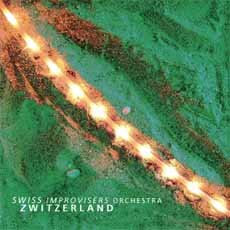 ...Swiss Improvisers Orchestra - Zwitzerland...A nonet, in fact, horns, strings, piano, drums. The horns are rather loose and rolling, the rhythm section jumpy and angular, the pieces lurching along on the scant fuel of timbral color in what has long since become a standard sequence of marches, free squawls, quasi-bop, etc. Capably played, not very interesting.
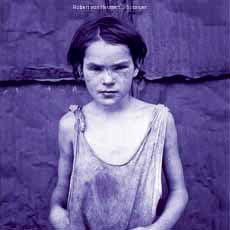 ...Robert Van Heuman - Stranger...Well, I liked the cover going in and the music didn't disappoint. Entirely new to me, von Heuman serves up strong electro-acoustic music out of the Raaijmakers and Koenig tradition (he's managing director at STEIM). I'm not normally taken with many of the sounds that emanate from ARPs and Korgs but von Heuman wrings out fresh juices from them here. Oh, it get loopy and blippy now and then, but still sounds ok. Two long tracks bracket a series of eight short ones, the latter a soundtrack for the radioplay "No Man's Land", a portrait of Dust Bowl Oklahoma, an interesting dislocation. Strong work, happy to have "found" Mr. van Heuman.
 ...Whistle Pig Saloon - s/t...Van Heuman is also half of this duo, along with guitarist John Ferguson. Equal parts STEIM-y electro-acousticism and raunchy guitar noise, the latter sometimes reminding me of Kaiser in his Synclavier period. Itchier than 'Stranger', it might find more favor among post-Zorn enthusiasts. Some good work (the piece "Hogg blog" stood out for me), but a bit too much in that hyperactive sprawl zone for my taste.
In summation, I'd recommend:
Sylvain Chaveau - Touching Down Lightly
Davies/Rives/Rodrigues/Rodrigues/Santos - Twrf Neus Ciglau
Grønvold/Volden - s/t
João Lucas - Abstract Mechanics
Milton/Thomas/Jewell Farmer - Bear Ground
Robert Van Heuman - Stranger
Not a bad batting average, actually.
Exhale.
Creative Sources
 Francois Carrier/Michel Lambert - Nada ....Carrier (alto and soprano, Nepali flute, objects) and Lambert (drums, objects). When Carrier's on saxes, it reminds me very much of the Braxton/Roach duets from the late 70s, when on flute, the Cherry/Blackwell sessions. Either way, competently and agreeably played, but nothing not heard before. 20 shortish tracks, not so differentiated. OK of its type.
  Sylvain Chauveau - Touching Down Lightly....Lightly indeed. Lovely solo piano piece, somewhat out of Feldman but not so much as to be distracting. Soft throughout, notes allowed to hang, occasional gentle repetitions, notes spiced with just enough sourness to avoid any overly sugary content. Echoes of Tilbury as well. Very enjoyable recording.
 ....Rhodri Davies/Stéphane Rives/Ernesto Rodrigues/Guilherme Rodrigues/Carlos Santos - Twrf Neus Ciglau...
Perhaps close to what one would expect: scratchy, thin drones punctuated by the rubbing of friction-filled surfaces, much air and space. It is all that, but also injects a kind of mystery--maybe it's the deep tolling that occasionally rises from the cello or a bit more emotive summoning from Rives. So, familiar yes, but fine integration of sounds and well paced, with verdant hills and valleys as well as the odd cwm.
 ...Glasgow Improvisers Orchestra (GIO) - Poetics...A 20-member ensemble, aside from the Rodrigues' (who, I take it, are guesting here) all names unfamiliar to me. Save for an electric guitar, all instruments are acoustic and include bazouki and shakuhachi in addition to standard axes. Muddy, meandering, little sense of space, sounding very much like any GUO-inspired large band you'd care to name, Aileen Campbell's voice sometimes evoking Centipede. Uninteresting, overall.
  ...Daniel Meyer Grønvold/Håvard Volden - s/t...Guitar/electronics duo (each on both). Brief disc, two tracks about 5 and 24 minutes, the first a really attractive set of hum and scrabble, perfectly balanced. The longer track might meander a bit more as it seeks to incorporate more elements, including pure and rich guitar strumming, but its structure essentially grips and things feel right at the end. Good recording, well worth hearing, especially for fans of Ielasi, Guerra, etc.
 ...João Lucas - Abstract Mechanics...Lucas (piano, accordion, electronics) and Miguel Mira (cell0) accompany Andresa Soares's improvised dance. Though prickly, the music has an underlying romanticism that forms a kind of connective tissue between the jumpy piano, the skittering cello and electronics/field recordings. Oddly unique sounding, though; can't quite come up with a reasonable comparison; sometimes Muhal at his warmest. Or a spikier Blue 'Gene' Tyranny. Hell, there's a section that reminds me of "1983....(A Merman I Should Turn to Be)". I gradually got into this a good bit, but it's a curveball to be sure. Proceed with caution.
 ...Millefleurs - Millefleurs...An all voice twelvetet (dodecatet?) out of Switzerland if I'm not mistaken, though the entire dozen never appears, no more than six at a time, I think. Small sounds, but all those we've heard hundreds of times before, smooches and clicks and yips, etc. Soft choral singing now and then, as on "passiflora incarnata", which is pleasant, if not bracing. Admittedly, free(ish) singing isn't my strong suit, but nothing here captured my attention at all.
  ....Matt Milton/David Thomas/Ryan Jewell/Patrick Farmer - Bear Ground...Violin/Viola/Snare drum and Drum, respectively, plus objects, breath, bamboo...Excellent soft, scratchy improv with tinges of melodicism. The second of three tracks loses its way somewhat, but the other two are models of imaginative concision within a fairly narrow sonic palette. A lot of "sliding" sounds, of objects being stroked across surfaces, very lovely. Good stuff!
 ..Quatre Têtes - Figuren...An unusual grouping of four heads: Susann Wehrli (flutes, melodica), Priska Waiss (trombone, alphorn), Gabriela Friedli (piano) and Claudia Ulla Binder (piano). Hard not to get a sense of Swiss rolling hills here (well, there is an alphorn), the fairly gentle undulations provided by the dual pianos and the round sounds of flutes and low horns. Generally pleasant enough, though with several missteps ("Penelope") where things wander off-track and stay there. Too slack structurally and a mite too busy for my taste, but fans of things that appear on Intakt might enjoy it.
 ...Ernesto Rodrigues/Guilherme Rodrigues/Carlos Santos/Andrew Drury - Eterno Retorno...Viola/cello/electronics/percussion, respectively. At its best, a churning, scratchy mass, like being in some kind of hay-vortex. The density level varies, gradually thinning out, but the quality remains consistent, the instruments achieving a fine cohesion, the activity maybe a tad busier than my eai-self is comfortable with, but always moving forward. Nice improv record, about halfway between eai and efi, which would make it about ec/di.
  ...Speak Easy - Backchats...Thomas Lehn (analog synth), Ute Wassermann (voice, whistles), Phil Minton (voice), Martin Blume (drums, percussion). I think there was less doubt in my head about how this was going to sound than any of the fourteen. Much sputtering and gurgling. And that's just the drums. Thank you, I'm here all week. I like Lehn and I carry a soft spot for Minton, but I just don't have the patience for all this chatter. Again, for listeners who've enjoyed similar work from these folk in the past or from the likes of David Moss, this will be right up their alley.
 ...Swiss Improvisers Orchestra - Zwitzerland...A nonet, in fact, horns, strings, piano, drums. The horns are rather loose and rolling, the rhythm section jumpy and angular, the pieces lurching along on the scant fuel of timbral color in what has long since become a standard sequence of marches, free squawls, quasi-bop, etc. Capably played, not very interesting.
  ...Robert Van Heuman - Stranger...Well, I liked the cover going in and the music didn't disappoint. Entirely new to me, von Heuman serves up strong electro-acoustic music out of the Raaijmakers and Koenig tradition (he's managing director at STEIM). I'm not normally taken with many of the sounds that emanate from ARPs and Korgs but von Heuman wrings out fresh juices from them here. Oh, it get loopy and blippy now and then, but still sounds ok. Two long tracks bracket a series of eight short ones, the latter a soundtrack for the radioplay "No Man's Land", a portrait of Dust Bowl Oklahoma, an interesting dislocation. Strong work, happy to have "found" Mr. van Heuman.
  ...Whistle Pig Saloon - s/t...Van Heuman is also half of this duo, along with guitarist John Ferguson. Equal parts STEIM-y electro-acousticism and raunchy guitar noise, the latter sometimes reminding me of Kaiser in his Synclavier period. Itchier than 'Stranger', it might find more favor among post-Zorn enthusiasts. Some good work (the piece "Hogg blog" stood out for me), but a bit too much in that hyperactive sprawl zone for my taste.
In summation, I'd recommend:
Sylvain Chaveau - Touching Down Lightly
Davies/Rives/Rodrigues/Rodrigues/Santos - Twrf Neus Ciglau
Grønvold/Volden - s/t
João Lucas - Abstract Mechanics
Milton/Thomas/Jewell Farmer - Bear Ground
Robert Van Heuman - Stranger
Not a bad batting average, actually.
Exhale.
Creative Sources
Wednesday, June 03, 2009

Mattin is ending his NYC residency, heading off soon to Sweden. His final show here was the tail end of an 11-stop tour with Tim Goldie (known as " ", for now), performing under the name, Deflag Haemorrage/Haien Kontra. As one could easily anticipate, Mattin wasn't about to let his audience off easy.
[The evening began with a set of songs by Pink Reason, the nom de guerre of Kevin de Broux, playing acoustic guitar--well mixed by Mattin over Issue Project Room's multiple speakers--and singing. The guitar was quite good, a kind of Fahey aspect in that what you first thought was one simple, if attractive, repeated sequence turned out to have two or three hidden layers, often quite beautiful. The singing itself was ok, not outstanding, the lyrics trite to the point I was wondering if they were intentionally so. I decided not.]
Speaking with Mattin prior to the set, I asked about the previous night's show in Philly at the Rotunda. He was annoyed about the seating arrangement there--basically, that there were seats. This inhibited what they would have liked to do, vis a vis audience terrorism. So, it came as no surprise when the 25 spectators (I use the term loosely) were told to fold up their chairs and assume an erect position. Mattin and Goldie had set up computers on pedestals, facing each other at a distance of about 15 feet, Goldie's having a mirrored top. Mattin then ventured into the sparse crowd and pushed six or seven people, one by one, so that they were positioned more or less between the pcs (I successfully dodged this maneuver). A high, buzzing, whistling tone emerged, flitting merrily amongst the overhead speakers.
Goldie (I'll refrain from calling him " " for this report, though he made frequent use of fingered quotation marks throughout the set) then emerged from near the entrance, a camouflage jacket pulled up over his head, wearing some kind of black mask and thrusting his arms straightforward, zombie-style, careening through the assembled gathering, muttering, yelling and generally writhing as though undergoing torture, presumably via the sound system. OK. I'm sorry, but this is just silly. Nothing shocking, nothing scary, nothing that shifts one's perspective, awakens latent sensibilities. All you can do is smirk, and feel a bit dopey for doing so, but what are the options? If that's the point (as with a good bit of the rest of the evening), it's easily enough achieved. Yes, you feel self-conscious as an audience member. Conceivably you might want to join in; some did, as I'll mention. But, for this observer, it's akin to being asked to sing along in some awful Kumbaya situation; the feeling of embarrassment is similar, more in the sense that, out of courtesy, you don't want to scowl in the person's face and leave.
Interspersed among activities such as these, there was a healthy chunk of raw music/noise and, though I feel a bit silly for saying so given the context, it was excellent: brutal while retaining subtlety, finely textured and with enough subsonics to set my jeans a-flutter. But it seemed almost beside the point.
Mattin took a mic at one juncture, walking about, allowing the wire to wrap around audience members and mic stands, causing one of the latter, extended to about ten feet tall, to fall on a trajectory that had my right eye as a target before my softball reflexes kicked in and stopped it. Loy Fankbonner, to his credit, provoked right back, plopping on a chair right next to Mattin, who now brusquely pushed him off it then engaged in a physical shoving match, one vs. three, against our friends Anne, Billy and Richard; he lost. All the while, Goldie continued to lurch around the space, moan, sing, crawl, whatever; not intriguing.
When Mattin returned to his computer, Loy continued to agitate, bringing a cell-cam right up to Mattin's face, shining it's bright light. He'd later ask Anne to get on a nearby bicycle and ride through the proceedings, which she valiantly did. Loy got into things, I imagine, in a manner that the pair was hoping would be a general reaction. Well, no. One would have to, at the very least, feel somehow compelled to do so, not to have it thrust upon one, though presumably Mattin thinks such actions are necessary to shock us out of our complacency, our voyeurism, our spectacle-craving. One obvious answer is, don't perform then. There's a bit too much having it both ways otherwise.
Then again, sometimes a gambit works. Mattin eventually crouched, looking into the back of Goldie's pc, where he observed and commented on audience activity. "Richard is laughing. Loy is getting a beer. Brian is hiding" In my defense, I was merely seeking a wall against which to lean so my back wouldn't kill me, at the same time providing somewhat more cover from the various thrown objects with eyeball-piercing potential, which included a violin bow. This worked, in a way, the self-consciousness it provoked seeming, to me, less silly, more capable of providing some self-reflection.
They took things out with some serious noise, quite good. Even if, in context, it had the sense of a bone tossed to the crowd for putting up with things.
The above written in one shot, not really thinking it through, doubtless omitting much. Glad I went as it at least inspired some thoughts. I don't think Mattin is near solving his quandary yet and wish him luck with it, quixotic though the quest may be. As long as he insists on vending his wares in performance spaces, there will be this rub. Better, perhaps, to just venture into the public space and see what happens, if anyone cares, allowing those who do to set their own parameters.
Wednesday, May 27, 2009

I mentioned a few weeks back that, at Record Club, Nina played a selection from this album. She lent it to me yesterday.
Holy crap! Amazing stuff, scaring and thrilling this atheist soul simultaneously. Congregational choirs from Alabama and Georgia, recorded in 2005-2006. My understanding (I could well be wrong) is that these aren't "choirs", just reg'lar folk, divided into four sections with a "conductor" for each and the hymns divided into parts, more or less soprano, alto, tenor, bass. Each one begins with a weird kind of solfege, as though to allow the group to find its tonal center and cadence, then they launch into the hymn proper. The untrained aspect seems to lend a rough-hewn, quavering quality that's quite stirring.
Anyway, thought I'd mention it here on the long shot that a reader might know more about the area. Just what I need, another sub-genre to investigate.
This is the soundtrack to a documentary which is also included, that I've yet to view.
Monday, May 25, 2009

Lucio Capece/Julia Eckhardt/Christian Kesten/Radu Malfatti/Toshimaru Nakamura/Taku Sugimoto - Wedding Ceremony (Cathnor)
A live recording, culled from two sets in Belgium, May 2007, and a rewarding and fascinating one.
Five pieces, four of them composed, most of the time freely admitting of the performing space ambiance. Christian Kesten's "zonder titel (schuif en ruis)" consists "simply" of lengthy sustained notes by the sextet tutti placed between extended sections of non-playing. The filled areas are made up of fine burbling with subtle, barely rising pitches. As with many works of this general form, its success relies, for me, on the natural deployment of the sound blocks, how well they "hang" in space. To my ears, this one does the trick and does it very well. It segues into a 20-minute improvisation, I assume from the same set though one of the effects of the ambient sounds throughout is to provide a tissue of sorts between the track. Quietly blistering. Nakamura (I'm guessing) inserts a few awkwardly loopy sounds, though even then if one listens in the context of the whole piece, they're more like brightly colored blips in a somber landscape--interesting to flip back and forth in one's head between the momentary irritation and broader scope. Overall, though, it's a fine and controlled piece; not dissimilar in most respects from other performances by like-minded musicians, but handled with great sensitivity. Much fun attempting, often unsuccessfully, to pick out Kesten. In my limited exposure to his work over the past year, he's become, with Ami Yoshida, my favorite vocalist in the music.
I've also been largely remiss in keeping track of Radu Malfatti's vast output over the last few years, but his composition here, "quartet + 2", seems to fit in comfortably with what I am familiar with, 27 minutes of sounds that seem more respired than played, like the breaths of some sleeping giant. There are enormously low tones in play (Toshi?), the other voices arrayed laminally, sliding in and out of unison, the background noises providing some salt. I do generally find this side of Malfatti's work to be transfixing and am again so impressed here. Hard to imagine tiring of listening to this; gorgeous work.
Listeners who've been unable to abide much of Sugimoto's recent composed music get another to chew on here, version 2.12 of his "doremilogy". A minute of room sound, a single clarinet note, three rising scale notes on the viola, three on clarinet, viola and guitar, five on another combination (I could be getting these wrong but they're additive), a full octave with everyone, etc. The salient aspect of this performance, clocking in at only four + minutes, is the timbral distortion applied to the notes in the scales, kind of like Richter doing a comfy mother and child painting then taking a board to rake the paint across the surface. I rather enjoy it.
This bleeds directly into the final and, arguably, most problematic work, an improvisation conducted by Capece based on his instructions which can be read here. As indicated, it's in two sections of equal length. The first is quite attractive, a succession of soft tones, gentle thwacks and high squeaks, having something of a ritualistic quality; very beautiful. Throughout this portion, Capece had been strolling through the audience, handing out bits of text. At the conclusion of the first section, Capece jarringly takes to the mic and asks the audience to participate (or not) as spelled out in his notes. There follows a couple of minutes of uncomfortable silence before one, then another few audience members recite the lines from Guy Debord, finally one in whispers. The awkward blockiness of this maneuver is, one supposes, an expected outcome, reinforcing perhaps the criticism of "spectacle" in the text. That tension comes through clearly; I imagine it did even more so in situ. Does it, that second section, "sound" great? No. Should the work have been included on an audio CD as opposed to having been simply experienced live? Not sure. I like very much actively involving the audience in unique ways which, I'd have to say, includes asking them to consider reading aesthetically and politically charged statements, as long as they decide whether or not to do so. The psychological pressure that may have been in play does provide tension; whether it's welcome or not or, indeed, verges on the oppressive...that's a question. Ultimately, I'm glad it's here, if only in the interests of fair representation of the musician's activities and range of investigations.
Many ideas packed in, several of them beautifully expressed.
cathnor
Subscribe to:
Posts (Atom)